
Plants
Timing your grass seed planting in Colorado isn’t just about following a calendar—it’s about outsmarting the state’s unpredictable elevation shifts and frost risks that can turn your lawn dreams into a high-altitude gamble. Whether you’re in the Front Range’s milder Zone 5-7 or the Western Slope’s colder Zone 4-6, planting too early risks frost damage, while waiting too long means drought stress before roots take hold.
I’ve seen firsthand how 5-degree temperature swings overnight can derail even the best-laid plans—and that’s before accounting for Colorado’s notorious late-spring frosts or early-summer dry spells. The key isn’t just picking a month; it’s reading your microclimate like a pro, from soil warmth to local frost maps.
In this guide, I’ll break down the exact planting windows for your elevation zone, plus the seed types that thrive in Colorado’s spring vs. fall conditions. You’ll learn how to prep your soil, choose the right variety, and avoid the 3 biggest mistakes that kill grass before it grows.
Let’s get your lawn off to the strongest start possible—no guesswork, just science-backed timing tailored to where you live.
Colorado grass planting deadlines by elevation Zone (with frost risk maps)
Colorado’s elevation zones create wildly different planting windows—what works in Denver (5,280 ft) fails in Aspen (8,000 ft). The key is soil temperature (ideal: 55–65°F) and last-frost dates, which shift dramatically. Below are your elevation-specific deadlines, based on Colorado State University data and NOAA frost maps.
For Front Range cities (4,000–6,000 ft), like Denver, Aurora, or Fort Collins, aim for late April to mid-May or August to early September. These zones have 120–150 frost-free days, giving grass roots time to establish before winter.
Higher elevations (6,000–8,000 ft, like Colorado Springs or Salida) push deadlines 2–3 weeks later due to cooler soils and later snowmelt.
Mountain regions (8,000+ ft, such as Estes Park or Leadville) require even tighter windows: mid-May to June or late July to August.
Here, soil stays cold longer, and late-spring snow can delay planting by weeks. Always check the CSU Extension’s frost calendar for your exact location.
🌱
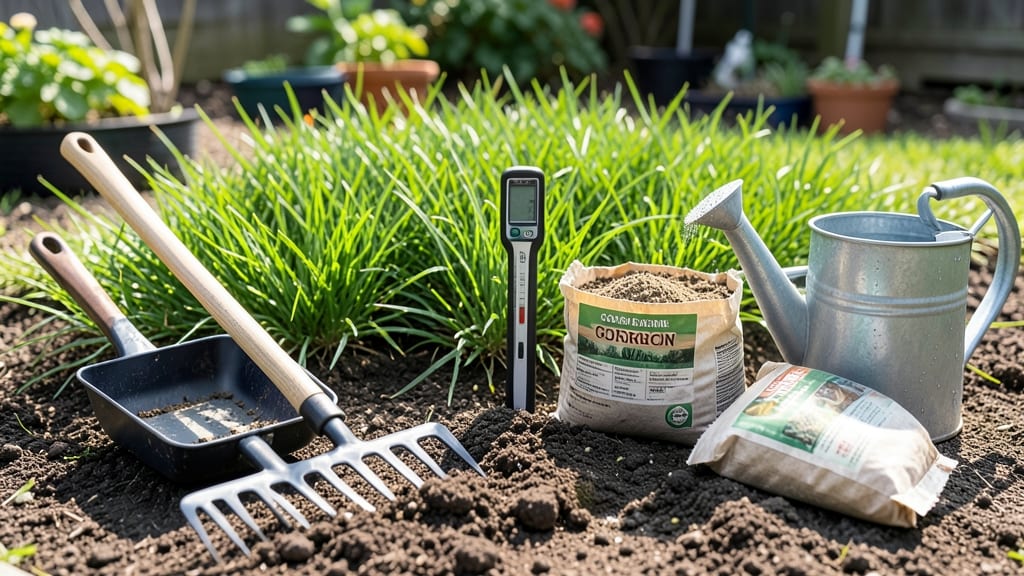
Pro tip: Use a soil thermometer to confirm temperatures before planting. Bury it 2 inches deep (where seeds will sit) and wait until readings stay above 55°F for 3+ days. In high-altitude zones, this can mean waiting until June—don’t rush!
For late-summer planting (August–September), prioritize cool-season grasses like Tall Fescue or Kentucky Bluegrass, which establish roots quickly in 60–70°F soil. Avoid warm-season grasses (e.g., Buffalo Grass) in Colorado—they struggle with our cool nights.
🌡️
If you’re in Zone 4 (Western Slope), like Grand Junction, add 1–2 weeks to these deadlines. Desert microclimates dry out faster, so seed germination hinges on consistent moisture. Use mulch or shade cloth to retain soil moisture until roots establish.
Finally, track your local frost dates using the NOAA’s Colorado Climate Center or CSU’s PlantTalk newsletter. A single late frost can wipe out young seedlings, so don’t plant until you’ve seen 3 consecutive nights above 40°F.
How to adjust your planting timeline for Colorado’s microclimates (and avoid common mistakes)
Colorado’s microclimates can shift planting windows by weeks—even miles apart. Urban areas like Denver (5,280 ft) may see 10°F warmer soil temps than nearby Boulder due to pavement heat absorption. Meanwhile, Western Slope towns like Grand Junction (4,450 ft) often experience later frost risks than Front Range cities.
Ignoring these variations means your seed could rot in cold soil or bake in dry heat.
Start by checking NOAA’s Colorado-specific frost maps (available at [NOAA’s Climate Prediction Center](https://www.cpc.ncep.noaa.gov/)) for your exact ZIP code. These maps show historical frost dates with a 90% accuracy rate—critical for adjusting your schedule.
For example, Fort Collins (Zone 5) averages its last frost on April 22, while Telluride (Zone 4) may still see frost in May. Planting too early in these areas risks seedling death from overnight freezes.
- Urban Heat Islands: Asphalt absorbs heat—soil temps can be 5–10°F warmer in Denver than rural areas. Wait until soil reaches 50°F (use a soil thermometer) before planting.
- Wind Exposure: High-altitude areas (e.g., Eagle County) lose moisture 3x faster due to wind. Use windbreaks or plant in late spring (June) to reduce evaporation.
- Late-Spring Snowmelt: Mountain regions (e.g., Vail) may have snow cover until June. Test soil moisture weekly—plant only when the top 2 inches are dry.
Use the "morning dew test" to gauge readiness: If dew persists until 10 AM, your soil is still too cold for germination. For high-elevation areas (7,000+ ft), delay planting until June 15 to avoid late frost risks.
In contrast, lowland areas (4,000–5,000 ft) like Colorado Springs can start as early as March 15—but monitor NOAA’s 7-day forecasts for sudden cold snaps.
Adjust your watering schedule based on microclimates too. Wind-prone areas (e.g., Pueblo) need daily watering for the first 2 weeks, while shaded urban lots (e.g., Aurora) may require less frequent but deeper watering to prevent fungal growth.
Always water early morning (6–9 AM) to maximize absorption and minimize evaporation.
Pro tip: Use CSU Extension’s PlantTalk Colorado app to input your exact location and receive hyper-local planting alerts. The app accounts for soil type, elevation, and historical weather patterns to suggest the optimal 7-day window for your seed.
For example, it might recommend April 20–27 for Fort Collins but May 15–22 for Gunnison.
If you miss the spring window, don’t panic—late summer (August–September) is your second chance. However, avoid planting after September 15 in most of Colorado, as daytime temps drop below 70°F, slowing germination.
For Zone 4 areas (e.g., Durango), shift to late August to ensure 60+ days of warm soil before first frost.
Remember: Soil temperature matters more than air temperature. Use a soil thermometer ($10 at garden centers) to confirm 50°F+ for cool-season grasses or 60°F+ for warm-season varieties. In high-altitude zones (8,000+ ft), soil may stay cold until June 1—patience is key to avoiding seed rot.