
Trees
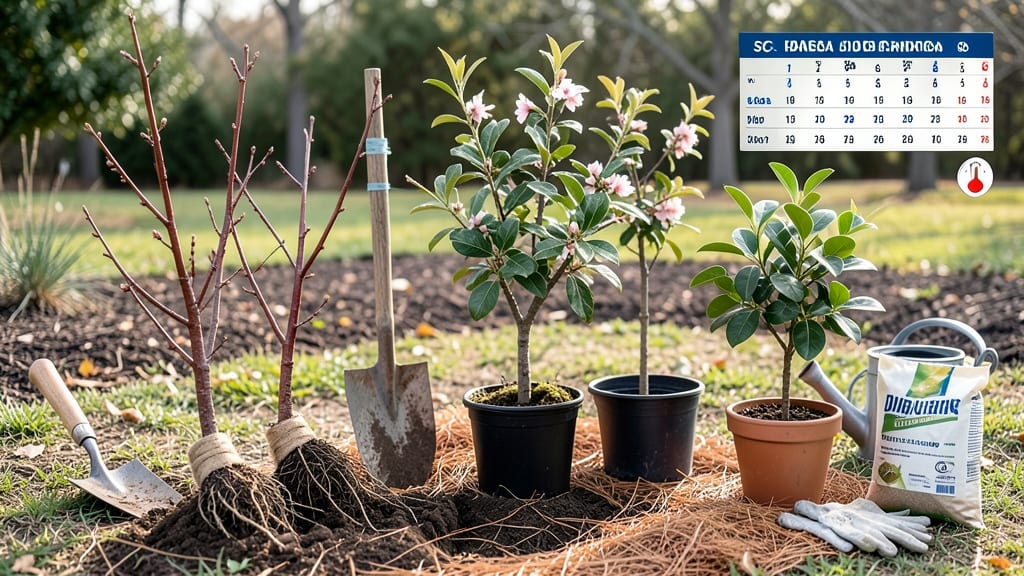
Planting fruit trees in South Carolina at the wrong time could mean struggling with weak roots, stunted growth, or even losing your young 🍎 trees to heat or disease—but get the timing right, and you’ll set them up for years of lush harvests.
With USDA zones 7b-8b offering a mix of mild winters and long summers, the best window for planting is actually late winter or early spring, when the soil is workable but the trees haven’t yet broken dormancy.
This means February through March is your sweet spot for bare-root trees, while container-grown varieties can go in slightly later.
Why does timing matter so much? Because fruit trees need 2-3 months to establish roots before summer’s heat kicks in. Plant too early, and frost can damage tender shoots; too late, and your trees might wilt under the sun.
I’ll break down the exact months for peaches, apples, figs, and more—plus how to adjust for South Carolina’s coastal vs. Piedmont microclimates.
Ready to give your fruit trees the perfect start? Let’s dive into the best months for planting in your specific zone, plus pro tips to keep your young trees thriving through SC’s unpredictable seasons.
Best planting months for fruit trees in South Carolina by variety
South Carolina’s humid subtropical climate means your fruit trees face unique challenges—from late frosts in the Upstate to summer humidity in the Lowcountry. But the right planting window can set your trees up for success.
Most bare-root fruit trees thrive when planted in late winter or early spring, while container-grown trees offer more flexibility. Let’s break down the best times for popular SC varieties.
For peach and nectarine trees, aim for February to early March—this gives roots time to establish before the spring bloom. Apple and pear trees, which need more chilling hours, do best in late February to March.
Meanwhile, figs and citrus (like Meyer lemons) can handle warmer springs and may be planted as late as April or May, especially in the Coastal Plain.
Here’s a quick guide to help you choose the best time for your fruit tree variety:
If you’re planting container-grown trees, you have more flexibility—you can plant them year-round, but avoid extreme heat or cold.
For example, a Meyer lemon tree can go in the ground in April or May in Charleston, but it’s better to wait until late spring in Greenville to avoid late frosts.
One critical rule: Plant 2–3 months before your last frost date. In most of SC, that’s mid-March, but check your local USDA zone—Upstate areas (Zone 7b) may need to plant earlier than the Coastal Plain (Zone 8b).
For example, peach trees planted in February in Greenville will have a head start over those planted in April.
For bare-root trees, the goal is to get roots into the soil before buds swell. If you miss the window, don’t panic—just water deeply and mulch well to help the tree recover. Container-grown trees, however, can handle spring planting better because their roots are already established.
Pro tip: If you’re in a warmer microclimate (like near the coast), you can push planting into early April for heat-loving varieties like figs or loquats. But if you’re in the Upstate Piedmont, stick to February or March to avoid late spring frosts that can damage blossoms.
Finally, always check the chilling hour requirements for your specific variety. For example, Elberta peaches need 600+ chilling hours, while Redhaven peaches only need 400–500. Planting at the right time ensures your tree gets enough cold to bloom and fruit properly.
With the right timing, your fruit trees will establish strong roots, bloom beautifully, and reward you with years of homegrown fruit. 🌱
Best planting months for fruit trees in South Carolina by variety
South Carolina’s humid subtropical climate (USDA zones 7b-9a) means your fruit tree’s planting window depends on variety-specific needs. Most bare-root trees thrive when planted in late winter or early spring, while container-grown trees offer more flexibility.
Let’s break down the best times for popular SC varieties to ensure strong root growth before summer heat arrives.
For peach and nectarine trees, aim for February through March—they need 300-600 chilling hours to set fruit properly. Apple and pear trees, which require 500-900 chilling hours, also prefer this window.
Meanwhile, figs and citrus (like Meyer lemons) can handle spring or even fall planting since they’re less sensitive to cold.
Why timing matters: Planting too early risks frost damage, while late planting may stress roots before summer’s heat. In SC’s coastal regions, extend planting into April to avoid humidity-related diseases. Always check your last frost date—typically mid-March in Upstate and late February in Charleston.
| Variety | Best Planting Window | Chilling Hours Needed | Notes |
|---|---|---|---|
| Peach/Nectarine | Feb–Mar (bare-root) / Apr (container) | 300–600 hrs | Plant before buds swell; avoid humid summers |
| Apple/Pear | Feb–Mar (bare-root) / Apr–May (container) | 500–900 hrs | Choose cold-hardy varieties like 'Anna' or 'Moonglow' |
| Fig | Feb–Apr or Sep–Oct | 0–200 hrs | Heat-tolerant; great for coastal areas |
| Citrus (Meyer Lemon) | Mar–Apr (container only) | 0 hrs | Protect from frost; plant in pots for flexibility |
| Blueberry | Feb–Mar (acidic soil prep needed) | 150–300 hrs | Amend soil with peat moss; avoid alkaline areas |
Container-grown trees offer year-round flexibility but avoid planting during SC’s hottest months (June–August) or freezing spells (December–January). If you’re in the Upstate, where winters are cooler, you can push planting to early April. Meanwhile, coastal gardeners should plant by mid-March to beat summer humidity.
Pro tip: Soak bare-root trees for 1–2 hours before planting to rehydrate roots. For container trees, water deeply the day before to reduce transplant shock. Mulch heavily after planting to retain moisture—critical in SC’s sandy soils or clay-heavy Midlands.
Remember, root establishment is your top priority. Trees planted in late winter or early spring have 6–8 weeks to grow roots before summer stress hits. With the right timing, your fruit trees will reward you with years of bountiful harvests—not just next year, but for decades to come. 🌱🍑🍎