
Flowers
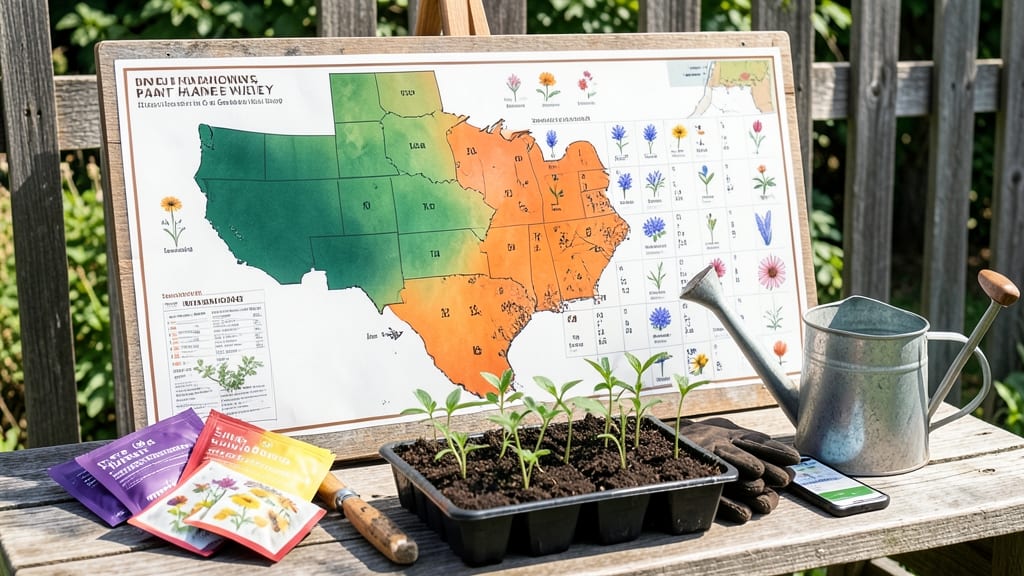
Timing your flower seed planting in Texas isn't just about the calendar—it's about beating the heat, avoiding frost, and working with your local microclimate.
Whether you're in the Panhandle or South Texas, getting those seeds in the ground too early risks a surprise freeze, while waiting too long means wilting before blooms even appear.
Texas gardeners know the ideal window shifts dramatically from north to south. In Zone 8a-10b, late winter through early spring (February-March) is your golden hour for most 🌸 flower varieties, but fall planting (August-September) unlocks winter color in milder regions.
The key? Start seeds indoors 6-8 weeks before your last frost date—or skip the gamble and go straight to heat-tolerant annuals like zinnias and cosmos.
But here's where most guides fail: Texas isn't one-size-fits-all. North Texas' dry heat demands different prep than South Texas' humidity, and West Texas' arid soil needs extra moisture tricks.
I'll break down exactly which flowers thrive in each region, when to direct-sow vs. start indoors, and how to stretch your blooming season with succession planting—no more guessing games.
Ready to transform your Texas garden into a year-round flower powerhouse? Let's dive into the month-by-month strategy that actually works for your corner of the Lone Star State—because the right timing turns seeds into showstopping blooms, not sad, sun-scorched sticks.
Texas planting zones by month: frost-free flower seed timing guide
Texas spans 11 USDA planting zones, from Zone 6b in the Panhandle to Zone 10a in South Texas. This means your last frost date could be February 15 in North Texas or as early as January 15 in the Rio Grande Valley.
Getting your timing right ensures your flower seeds germinate in ideal conditions—not too hot, not too cold.
Most Texas gardeners focus on two main planting windows: late winter/early spring and early fall. Spring planting (after the last frost) gives flowers time to establish before summer heat, while fall planting (August-September) lets cool-season bloomers thrive before winter.
But the exact months depend on where you live in the Lone Star State.
Here’s a breakdown of the best months to plant flower seeds across Texas’ key regions, including heat-tolerant favorites like zinnias, cosmos, and salvias that thrive in Texas summers.
If you’re in North or Central Texas, aim to plant flower seeds by mid-April for summer blooms. But in South Texas, you can push it to March or even April because the soil stays warmer longer.
For West Texas, some gardeners wait until May to avoid early-season heat stress on delicate seeds.
Pro tip: Start heat-loving flowers like zinnias and cosmos indoors 4–6 weeks before your last frost date. This gives them a head start before transplanting into the garden. For cool-season flowers like snapdragons or sweet alyssum, wait until September in most of Texas to avoid winter freezes.
Remember, Texas summers are too hot for most flower seeds to germinate directly in the soil. Instead, focus on spring and fall planting for the best results.
Even in Zone 10a, where winters are mild, a late frost can still sneak up in January or February, so timing matters!
For extended blooms, consider succession planting—sow a new batch of seeds every 2–3 weeks in spring or fall. This ensures a continuous display of color in your garden, whether you’re growing annuals or perennials.
Best flowers to plant by Texas region: heat, humidity, and soil adaptations
Texas' four distinct regions each demand different flower varieties to thrive. North Texas' dry summers favor drought-tolerant blooms, while East Texas' humidity rewards shade-loving perennials. West Texas' arid soil needs moisture-retentive plants, and South Texas' tropical climate lets you grow year-round.
Let's match your region to the perfect flower seeds for your garden.
For North Texas (Zones 7b-8a), prioritize heat-resistant annuals like black-eyed Susans and Mexican sunflowers, which handle 100°F+ temperatures without wilting. Lantana and salvia also thrive here, offering months of blooms with minimal water.
In East Texas (Zones 7a-8b), focus on humidity-loving flowers such as impatiens and coleus, which flourish in shady, moist conditions.
West Texas (Zones 7a-8a) demands ultra-drought-tolerant options like desert marigolds and blanket flowers, which store water in their thick stems. These native Texas flowers need almost no irrigation once established. Meanwhile, South Texas (Zones 9a-10b) gardeners can plant tropical flowers like hibiscus and plumbago year-round, with fall planting (August-September) ensuring winter blooms.
🌱 North Texas (Dry Heat)
- 🌻 Zinnias: 60-day blooms, drought-tolerant, cut-flower favorite
- 🌼 Blanket Flower: Orange-red blooms, thrives in poor soil, attracts pollinators
- 🌺 Lantana: Non-stop blooms, deer-resistant, loves full sun
- 🌿 Russian Sage: Purple spikes, zero water needs after establishment
🌧️ East Texas (Humid)
- 🌸 Impatiens: Shade-loving, bright colors, thrives in moist soil
- 🌿 Coleus: Foliage plant, low-light tolerant, great for containers
- 🌺 Begonias: Wax-like blooms, humidity-friendly, partial shade
- 🌿 Ferns: Year-round greenery, shady spots, low-maintenance
🏜️ West Texas (Arid)
- 🌵 Desert Marigold: Yellow blooms, zero water, rock garden star
- 🌼 Yucca Flower: Dramatic spikes, drought-proof, wildlife magnet
- 🌿 Agave: Succulent foliage, no soil needed, modern look
- 🌸 Bluebonnet: Texas state flower, spring blooms, wildflower meadows
🌴 South Texas (Tropical)
- 🌺 Hibiscus: Bold tropical blooms, year-round color, hummingbird favorite
- 🌿 Plumbago: Blue morning blooms, fast-growing, vining habit
- < Pansies: Winter blooms, fall planting, cool-season color
- 🌺 Bougainvillea: Vibrant foliage, heat-loving, drought-tolerant
Pro tip: Fall planting (August-September) in South and Central Texas unlocks winter blooms with pansies and snapdragons. These cool-season flowers thrive when summer heat fades, giving you color through December.
For North Texas, start zinnias and cosmos indoors in February to beat the late-spring freezes that can nip young seedlings.
Regardless of your region, soil prep is critical.
Amend clay-heavy soils (common in East Texas) with compost and sand, while West Texas gardeners should focus on mulching to retain moisture. South Texas' sandy soil benefits from organic matter to improve water retention—because even drought-tolerant plants need a good start.
Now that you've matched your region to the perfect flower seeds, it's time to extend your blooming season with succession planting and frost protection—stay tuned for my next section on pro tips to keep your Texas garden in bloom year-round.