
Plants
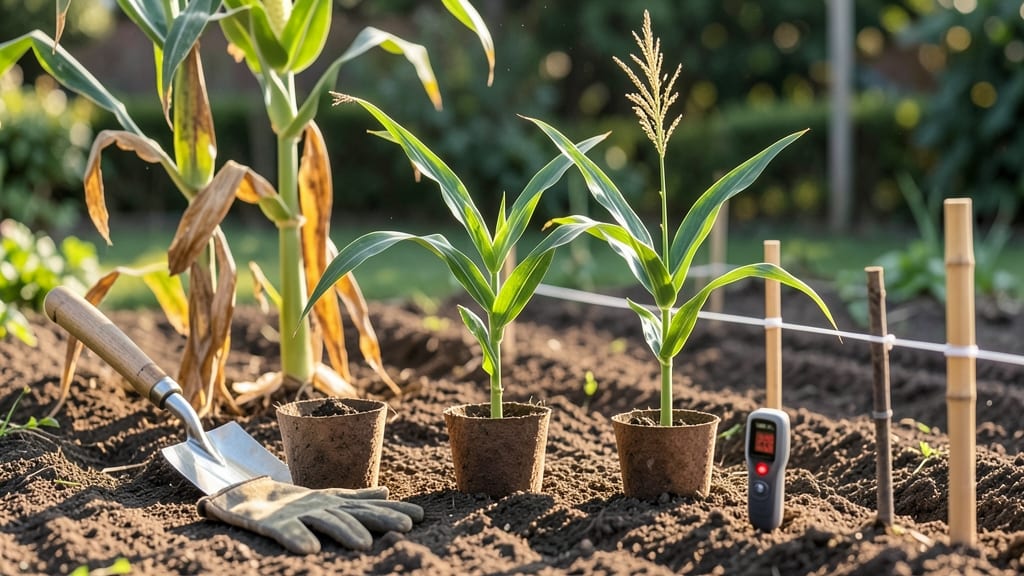
Timing your corn planting in Middle Tennessee can mean the difference between a bumper crop of sweet 🌽 and a disappointing harvest—or worse, losing your entire investment to frost.
With our Zone 7a climate, getting those seeds in the ground at the right moment is everything, especially when unpredictable spring weather can throw off even the best-laid plans.
Most gardeners here know the general rule: wait until after the last frost, which typically falls around mid-April for most of Middle Tennessee.
But here’s the catch—planting too early when soil temperatures are still cool (50°F) can stall germination, while waiting too long risks shorter daylight hours cutting your growing season too short for a full harvest. The sweet spot? Mid-April to early May, when both soil and air cooperate.
In this guide, I’ll break down exactly how to read your local frost data, adjust for early vs. late springs, and even choose the right corn varieties that thrive in our 200-day growing season.
Whether you’re a first-time gardener or a seasoned pro, these insights will help you maximize your yield without the guesswork.
Ready to turn your garden into a corn patch that rivals the best local farms? Let’s dive into the perfect planting window for Middle Tennessee’s climate—and how to keep your 🌽 growing strong until harvest time.
Middle Tennessee corn planting timeline by USDA Zone 7a/7b (with frost risk analysis)
Middle Tennessee’s USDA Zones 7a and 7b offer a 200-day frost-free growing season, but corn’s warm-season requirements demand precision. Planting too early risks frost damage, while late plantings may struggle with shorter daylight hours and heat stress before harvest.
The key is aligning your schedule with soil temperatures (50°F+ for 10+ days) and historical frost dates.
For Zone 7a (cooler microclimates like higher elevations), aim for mid-April to early May after the last frost. Zone 7b (warmer areas like Nashville) can start slightly earlier—late March to mid-April—but always verify with local NOAA frost data.
Sweet corn varieties like ‘Silver Queen’ mature in 75 days, while field corn may take 100+ days, so adjust timing accordingly.
Heat units (growing degree days) are critical: corn needs 2,500–3,000 heat units to mature. Use a heat unit calculator (like the University of Tennessee Extension’s tool) to fine-tune your planting window. For example, a late-April planting in Zone 7a gives you ~180 days to harvest before the first frost, while a May planting may only yield 150 days—too short for most varieties.
Unpredictable spring weather complicates timing. If soil temperatures stay below 50°F for more than 3–4 days, germination slows or stalls. Use a soil thermometer to confirm readiness.
In late springs (like 2021’s delayed warming), opt for early-maturing hybrids (e.g., ‘Peaches and Cream’) or extend the season with row covers.
Here’s how Zone 7a vs. 7b planting windows compare, including frost risk and ideal varieties:
| Factor | USDA Zone 7a (Cooler) | USDA Zone 7b (Warmer) |
|---|---|---|
| Last Frost Date | April 15–May 1 | March 25–April 10 |
| Optimal Planting Window | Mid-April to early May | Late March to mid-April |
| Soil Temp Threshold | 50°F+ for 10+ days | 50°F+ for 7–10 days |
| Recommended Varieties | ‘Silver Queen’ (75 days), ‘Peaches and Cream’ (80 days) | ‘Ambrosia’ (85 days), ‘Bodacious’ (90 days) |
| Frost Risk After Planting | High if planted before April 15 | Low after April 1 |
| Heat Unit Goal | 2,500–2,800 | 2,800–3,000 |
Pro tip: If you’re in a microclimate (e.g., near a lake or urban heat island), you may plant 1–2 weeks earlier than the zone average. Monitor local weather stations (like Nashville’s WKDF) for real-time updates.
For succession planting, stagger seeds every 2 weeks up to mid-June to ensure a continuous harvest before frost.
For field corn (used for livestock or grain), extend your window to late May—these varieties need 100+ days and can tolerate slightly cooler soils. However, sweet corn planted after June 1 risks stunted ears due to shorter daylight.
Balance your planting schedule with harvest goals: aim to harvest before September 1
5 Signs your Middle Tennessee corn planting timing is perfect (or too early/late)
Timing corn planting in Middle Tennessee isn’t just about checking a calendar—it’s about reading your soil, weather patterns, and even your corn’s behavior.
Since Zone 7a/7b can swing from freezing nights to 90°F heatwaves in weeks, these 5 key signs will tell you when your corn is ready to thrive—or when you’ve planted too soon.
First, your soil temperature must stay above 50°F for 10+ days. Use a soil thermometer—corn seeds won’t germinate below this mark, and early planting in cold soil leads to rot or slow sprouting.
Aim for 60°F+ for faster growth, especially if you’re growing sweet corn varieties like ‘Silver Queen’ that need to mature quickly.
Next, watch for consistent moisture without soggy soil. Corn needs 1-2 inches of water weekly, but standing water stresses roots.
If your garden feels dry but crumbly (like a damp sponge), it’s prime planting weather. Overwatered soil (muddy when squeezed) delays germination, while bone-dry soil causes seeds to dry out before sprouting.
Here’s where local weather forecasts become your best friend. Check NOAA’s Middle Tennessee climate data for frost risk—plant no earlier than 2 weeks after your average last frost date (typically mid-April for Zone 7a, early May for Zone 7b).
A late frost can kill young seedlings, but planting too late (after June) risks stunted ears before fall frost.
Corn’s own signals are the most reliable. If your seeds sprout within 7-14 days of planting, you’ve nailed the timing. But if seedlings take 3+ weeks to emerge, your soil was likely too cold. Conversely, if silks appear within 60 days of planting, you’re on track for a peak harvest in late July—any later, and you’ll face ear rot or bird damage before frost.
Finally, observe your neighborhood’s corn. If nearby gardens already have 6-inch-tall seedlings with unfurling leaves, it’s safe to plant. But if their plants look stunted or yellow, you’ve missed the window—wait another 2-3 weeks for warmer soil.
🌱
Soil must stay 50°F+ for 10+ days (use a thermometer!). 60°F+ speeds up germination.
Soil should be damp but crumbly—not soggy or bone-dry. Corn hates waterlogged roots!
Plant 2 weeks after last frost (Zone 7a: mid-April; Zone 7b: early May). Check NOAA forecasts!
7-14 days to sprout = perfect timing. 3+ weeks = soil too cold.
Healthy 6-inch seedlings? You’re good. Stunted plants? Wait 2-3 weeks.
Pro tip: If you’re late to plant (after early June), opt for short-season varieties like ‘Early Sunglow’ (60-day maturity) or use row covers to protect young plants from fall frosts. Even a 10-day delay can reduce yields by 20-30%, so don’t wait too long!
Once you’ve confirmed all 5 signs, mark your calendar for harvest time—corn planted in mid-April typically reaches peak sweetness in late July. And if your silks turn brown and kernels feel milky when pierced, you’re ready to grill or can your bounty! 🌾