
Plants
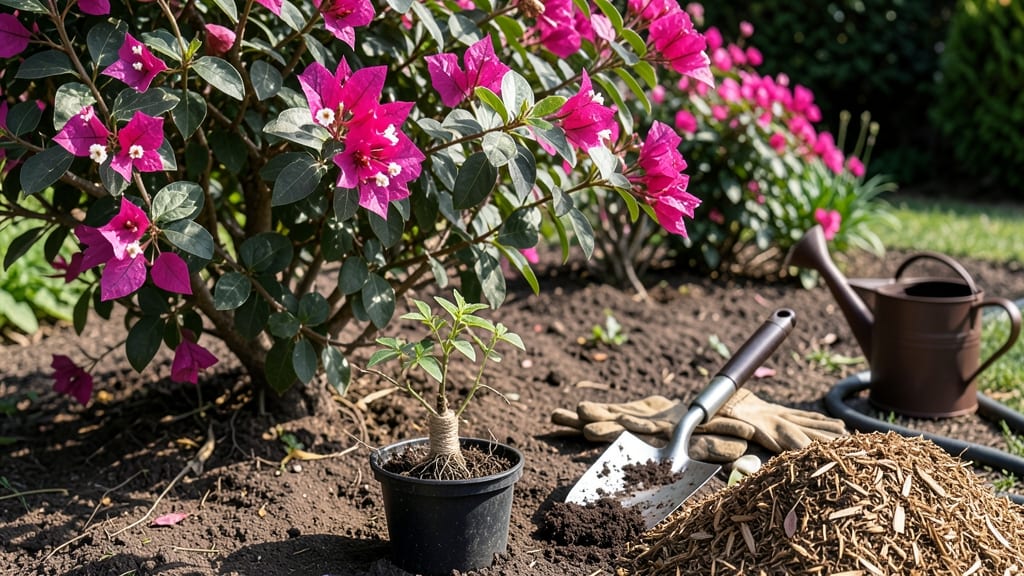
If you’ve ever dreamed of your Texas yard bursting with vibrant bougainvillea 🌸 blooms year-round, timing your planting is the game-changer between frustration and stunning success. Planting too early risks frost damage, while waiting too long means struggling through Texas summers before those showstopping bracts appear.
Texas’s unique microclimates—from the Gulf Coast’s humidity to the Hill Country’s dry heat—mean one-size-fits-all advice won’t cut it. The key is leveraging USDA zones 8a-10b to your advantage, whether you’re in Houston or El Paso.
I’ll break down the exact heat zone deadlines for spring and fall planting, so you can skip the guesswork and get those thorny vines thriving faster.
Beyond deadlines, we’ll cover soil prep tricks to beat Texas’s infamous caliche clay, how to tell when your bougainvillea is truly ready to plant (hint: it’s not just about frost dates), and why container vs. in-ground planting makes a difference in your region.
Let’s turn your bougainvillea dreams into year-round reality—without the trial-and-error.
Ready to transform your yard into a Texas-sized bougainvillea paradise? The right timing isn’t just about avoiding frost—it’s about harnessing the heat to trigger explosive growth and nonstop blooms. Let’s get started.
Texas heat zones: best planting months by region for bougainvillea success
Texas’s diverse climate means bougainvillea planting deadlines vary wildly from the Gulf Coast’s humidity to the Hill Country’s dry heat. In USDA zones 8a-10b, timing isn’t just about frost—it’s about soil warmth and avoiding 100°F+ summer stress. Here’s your region-specific roadmap to year-round blooms.
For North Texas (Dallas-Fort Worth), aim for March 15–April 15—after the average last frost (Feb 15) but before consistent 90°F+ days.
The Hill Country (Austin-San Antonio) can plant February 1–March 30, while the Gulf Coast (Houston-Galveston) has a longer window: January 15–April 1 due to milder winters.
Fall planting is also critical—September 1–October 31 lets roots establish before winter chill. In Zone 9b+ (South Texas), you can even plant in November, but avoid December due to sporadic frost risk.
🌱
Why these deadlines? Bougainvillea roots stall below 60°F, and new growth wilts above 100°F. Planting in March gives roots 3 months to establish before summer’s peak heat, while fall planting avoids competing with summer’s water demands.
For container gardening, adjust timelines by 2–4 weeks earlier—pots heat up faster. Use black plastic pots to warm soil quicker in Zone 8a.
Pro tip: In Zone 9b+, you can plant year-round but prioritize September–November for winter resilience. The key is soil moisture—never let roots dry out during establishment.
🌿
Missed the spring window? Fall is your backup. Plant September–October to let roots harden before winter. In Zone 8a, mulch heavily with straw or pine needles to insulate roots from freeze-thaw cycles.
For urban heat islands (like Dallas or Houston), plant 1–2 weeks earlier—concrete absorbs heat, raising soil temps faster. Always water deeply before planting to reduce transplant shock in 100°F+ conditions.
Signs your bougainvillea is ready to plant (and how to prep for Texas conditions)
Not all bougainvillea plants are ready for Texas’s brutal heat and caliche soil. Look for vibrant bracts (the colorful paper-like leaves) that are fully unfurled and deep in color.
Avoid plants with brownish-green or closed bracts, as these signal stress or immaturity. The vines should also be thorny and woody, not sparse or rubbery.
Check the root system before planting—healthy roots should be white or light tan, not dark or mushy. If you’re buying from a nursery, ask when the plants were last pruned; bougainvillea needs a 2-3 week recovery after heavy trimming to bounce back in Texas’s intense sun.
⚠️ Warning: Avoid Planting During Extreme Heat
Texas summers can push soil temps to 110°F+, shocking new roots. Wait until soil temps drop below 85°F (check with a soil thermometer) before planting. Never plant in May or June—even drought-tolerant bougainvillea will struggle to establish.
Texas’s urban heat islands and clay-heavy soils demand prep work. Amend your planting hole with 50% native soil and 50% compost or potting mix to improve drainage. For containers, use a mix of cactus/succulent soil and perlite—bougainvillea hates soggy roots.
If you’re planting in North Texas or the Panhandle, acclimate container-grown plants to outdoor temps by placing them in partial shade for 3-5 days before full sun exposure. In South Texas or the Gulf Coast, where humidity is higher, mulch with gravel or bark to prevent fungal issues.
Prune 1/3 of the plant’s growth before transplanting to reduce shock. Focus on removing leggy stems and encouraging bushier growth—this helps bougainvillea recover faster in Texas’s 100°F+ afternoons. Water deeply the day before planting to hydrate roots and reduce transplant stress.
After planting, avoid fertilizing for 6-8 weeks—new roots need time to establish. Instead, focus on consistent morning watering and light shade cloth (30-50%) for the first 2 weeks to ease the transition.
Once established, your bougainvillea will reward you with year-round blooms—if you’ve planted it at the right time! 🌸🔥