
Plants
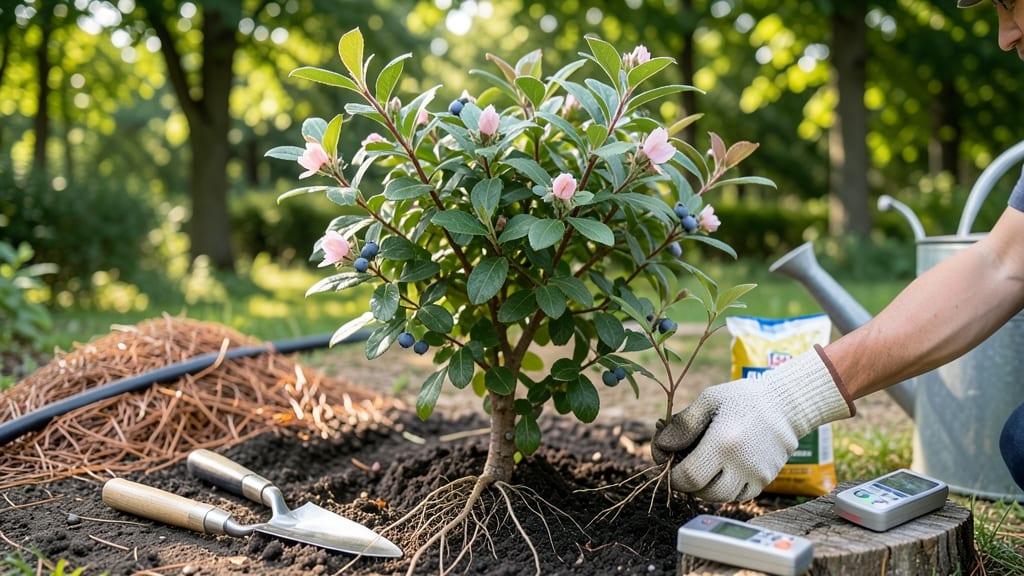
Timing your blueberry 🫐 planting in Colorado isn’t just about the calendar—it’s about matching your bushes to the region’s unique chill hours and frost patterns. Plant too early, and you risk frost damage; too late, and your bushes may struggle to establish roots before winter.
The key is knowing whether your area’s 5b, 6a, or 6b zone favors spring or fall planting for maximum yields.
Let’s cut through the confusion. Colorado’s high-altitude climate creates microclimates where Denver’s last frost can differ by weeks from Colorado Springs.
I’ll walk you through the exact windows—March–April for spring or September–October for fall—and how to prep your soil for these acid-loving shrubs so they thrive from day one.
You’ll also discover why bare-root plants outperform potted ones in Colorado’s dry air, plus regional tweaks like windbreaks for the Front Range or extra mulch for the Western Slope.
Whether you’re a first-time gardener or a veteran with stunted bushes, these insights will set you up for a bountiful harvest next summer.
Ready to turn your backyard into a blueberry patch? Let’s dive into the best planting strategies tailored to your corner of Colorado—no guesswork, just sweet results.
Colorado’s chill-hour zones: matching blueberry varieties for optimal growth
Colorado’s diverse elevations—from Denver’s 5,280 feet to mountain regions exceeding 8,000 feet—create microclimates that drastically affect blueberry growth. The key to success? Matching your chill-hour requirements (the number of hours below 45°F a plant needs to fruit) with the right variety.
Southern Highbush varieties thrive in 300–500 chill hours (ideal for Denver and Colorado Springs), while Northern Highbush need 800–1,000+ hours (better for mountain regions like Fort Collins). Half-High varieties bridge the gap with 500–700 hours, perfect for transitional zones.
If you’re in USDA Zone 5b (Denver, Boulder), focus on Southern Highbush like ‘Duke’ or ‘Premier,’ which fruit reliably with 400–500 chill hours. In Zone 6a (Colorado Springs, Pueblo), Half-High varieties like ‘Top Hat’ or ‘Chester’ shine with their 600–700 chill-hour tolerance.
For higher elevations (Zone 4–5, Aspen, Durango), Northern Highbush such as ‘Bluecrop’ or ‘Jersey’ handle 900+ chill hours without skipping fruit production.
Timing your plant’s dormancy is critical. In Colorado, fall planting (September–October) allows roots to establish before winter, while spring planting (March–April) avoids late frosts.
Southern Highbush can handle late spring planting (May) if soil temps stay above 40°F, but Northern varieties must go in by April 15 to avoid stress. Pro tip: Check your local CoCoRaHS frost date (Colorado Climate Center) to fine-tune your schedule.
Here’s how to decode your chill hours: Use a chill-hour calculator (like the one from University of Georgia) and plug in your zip code. For example, Denver averages 550 chill hours, while Grand Junction sits at just 350.
If you’re in a low-chill zone, opt for low-chill varieties like ‘Southern Belle’ (300 hours) or ‘O’Neal’ (400 hours).
Soil pH is just as critical as chill hours. Blueberries demand acidic soil (pH 4.5–5.5), but Colorado’s native soil often tests alkaline (pH 7.5–8.5). Amend your soil with peat moss, pine needles, or sulfur 4–6 weeks before planting.
A quick test: Sprinkle vinegar on bare soil—if it fizzes, your pH is too high and needs adjustment.
Let’s break down the best varieties for Colorado’s regions and their ideal planting windows:
If you’re in Denver or Colorado Springs, Southern Highbush varieties like ‘Duke’ or ‘Star’ are your best bet—they fruit reliably with 400–500 chill hours and tolerate Colorado’s dry heat better than Northern types.
For mountain regions, Northern Highbush like ‘Bluecrop’ or ‘Patriot’ handle the longer winters but need extra mulch to protect roots from freeze-thaw cycles. Pro tip: Group bushes by variety to ensure cross-pollination—most blueberries need two different cultivars for fruit set.
One common mistake in Colorado is assuming all blueberries need the same care. High-altitude bushes (above 7,000 feet) grow slower due to shorter growing seasons, so plant dwarf varieties like ‘Top Hat’ or ‘Peach Sorb
Step-by-step planting timeline for Colorado’s spring and fall seasons
Colorado’s diverse climate means your planting window depends on whether you’re in the Front Range, Western Slope, or Eastern Plains. For most regions, late winter to early spring (March–April) is ideal, while fall (September–October) offers a second chance—just avoid planting when frost is forecasted.
Let’s break down the exact steps for each season.
Start by checking your last frost date: Denver averages April 15, while Colorado Springs sees frost until May 1. Plant 4–6 weeks before your last frost for spring, or 6–8 weeks before first frost in fall. This timing ensures roots establish before extreme temperatures arrive.
For bare-root plants, dormancy makes them easier to handle. Container-grown blueberries can go in anytime during the growing season, but spring is best for immediate growth. Always choose acid-loving varieties like Bluecrop or Jersey for Colorado’s soil.
🌱
📅 Spring Planting Timeline (March–April)
- 🌱 Weeks 1–2 (Late February–March): Test soil pH (aim for 4.5–5.5) and amend with sulfur or peat moss if needed.
- 🪴 Week 3 (Early March): Dig holes twice as wide as the root ball and 2 inches shallower than the container.
- 💧 Week 4 (Mid-March): Plant bare-root bushes, spacing 4–6 feet apart, and water deeply to settle soil.
- 🌿 Week 5–6 (April): Mulch with pine needles or wood chips (3–4 inches) to retain moisture and acidity.
- ✂️ Week 7 (Late April): Prune dead wood and shape bushes for airflow, avoiding heavy cuts.
🍂 Fall Planting Timeline (September–October)
- 🌱 Weeks 1–2 (Early September): Prepare soil as in spring, ensuring it’s well-draining to prevent winter waterlogging.
- 🪴 Week 3 (Mid-September): Plant container-grown bushes, backfilling with acidic compost to blend with native soil.
- 💧 Week 4 (Late September): Water thoroughly after planting, then reduce frequency as temps drop below 50°F.
- 🌿 Week 5 (October): Add a 4-inch mulch layer to insulate roots from freeze-thaw cycles.
- ❄️ Week 6 (Early November): Protect young plants with burlap wraps if your region sees sub-zero temps.
In high-altitude areas (7,000+ ft), like the Rocky Mountain foothills, delay spring planting until May to avoid late frosts. Conversely, the Western Slope (e.g., Grand Junction) can plant as early as February due to milder winters. Always monitor local weather forecasts for unexpected frost warnings.
After planting, water deeply once a week for the first month, then taper to bi-weekly once established. Avoid overhead watering to prevent fungal diseases like botrytis, common in Colorado’s humidity shifts. Your blueberries will reward you with juicy berries in July–August if you nail these steps!