
Plants
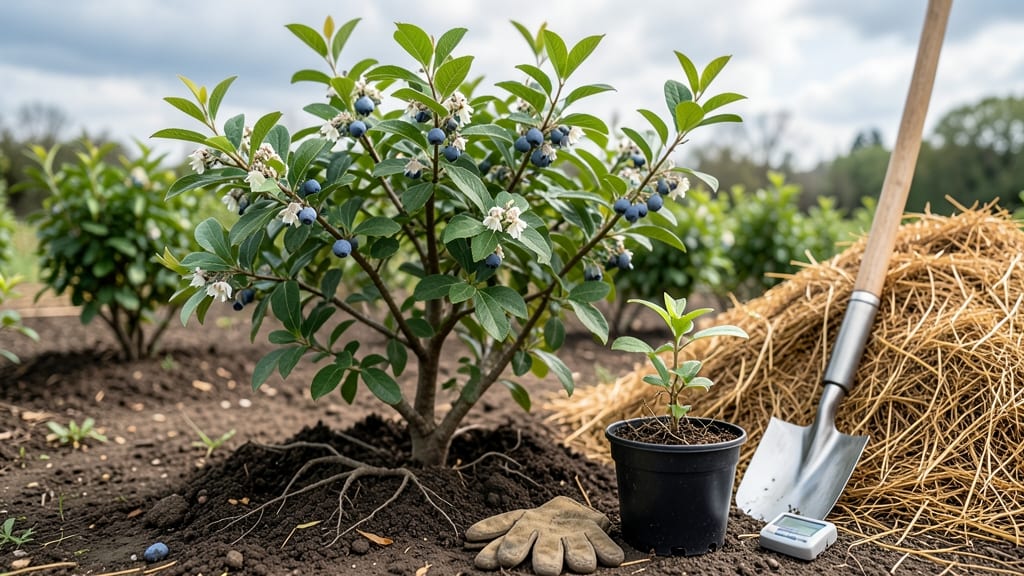
Timing your blueberry bush 🫐 planting in Georgia isn't just about seasons—it's about survival. Skip the wrong window, and your bushes may struggle to fruit (or even live) in the state's unique climate. With chill-hour needs ranging from 300 to 900 hours, Georgia's microclimates demand precision to align dormancy with spring growth.
Most gardeners assume spring is the only option, but late fall planting offers cooler roots and fewer summer stresses. I'll break down when to plant southern highbush vs. rabbiteye varieties, including how to calculate your local frost-free timeline using USDA Zone 7b-8b guidelines.
You'll also discover how soil prep, spacing, and post-plant care can make or break your first harvest. Whether you're planting bare-root bushes in October or container-grown plants in March, these strategies will help you avoid common mistakes that kill young blueberries.
Let's get your blueberry bushes off to the right start—because in Georgia, timing really is everything for a bountiful harvest.
Georgia’s best planting months for blueberries: southern highbush vs. rabbiteye
Georgia’s climate offers a perfect window for planting blueberries, but timing depends on your variety and microclimate. Southern highbush varieties thrive with 300–500 chill hours, while rabbiteye types need 500–900 chill hours.
Coastal areas (like Savannah) have milder winters, while Piedmont regions (Athens, Macon) experience colder snaps—both critical for dormancy and spring growth.
For southern highbush varieties, the ideal planting window is late fall (October–November) or early spring (February–March). This aligns with Georgia’s USDA Zones 7b–8b, where soil temperatures drop below 60°F but haven’t yet frozen. Rabbiteye varieties, however, benefit from fall planting (October) to establish roots before winter chilling.
Missed the fall window? Don’t stress—spring planting (March–April) works too, but prioritize bare-root plants over container-grown ones. Container plants can handle spring transitions better, but they’ll need extra watering as roots establish in warmer soil.
🌱 Key Insight: Coastal Georgia’s shorter chill hours (300–500) favor southern highbush, while Piedmont’s longer winters (500–900) suit rabbiteye. Check your local frost dates—coastal areas (Zone 8a) rarely see frost before January 10, while Athens (Zone 7b) may freeze by November 15.
| Variety | Chill Hours | Best Planting Window | Georgia Regions | Soil pH |
|---|---|---|---|---|
| Southern Highbush | 300–500 | Late Fall (Oct–Nov) or Early Spring (Feb–Mar) | Coastal (Savannah, Brunswick) | 4.5–5.5 |
| Rabbiteye | 500–900 | Fall (Oct) or Early Spring (Mar) | Piedmont (Athens, Macon), Mountains (Blue Ridge) | 4.5–5.5 |
| Container-Grown | 300–900 | Spring (Mar–Apr) or Fall (Sep–Oct) | Any Region | 4.5–5.5 |
🌿 Pro Tip: Test your soil’s chill hours using a chill-hour calculator (UGA Extension’s tool) or ask your local nursery.
If you’re in Zone 8a (coastal), prioritize southern highbush like ‘Peach Sorbet’ or ‘Climax’. These varieties fruit earlier and handle Georgia’s milder winters better. For Piedmont regions (Zone 7b), rabbiteye types like ‘Powderblue’ or ‘Tifblue’ thrive with longer chill periods and produce larger berries.
One common mistake is planting too late in spring. By May, Georgia’s heat can stress young bushes. If you miss fall, aim for March planting—just mulch heavily to retain moisture. Avoid planting in summer (June–August); the heat shocks roots, and dormant plants struggle to adapt.
For container-grown blueberries, the window extends slightly into May, but they’ll need daily watering and afternoon shade until roots establish. Container plants also let you adjust soil pH more easily, which is critical for Georgia’s alkaline native soils.
🌡️ Soil Temperature Matters: Roots need 45–60°F soil to grow. Use a soil thermometer—if temps are above 65°F, delay planting until fall. In Zone 7b, this usually means waiting until late October.
Finally, microclimates play a huge role. A south-facing slope in Athens may warm up faster than a north-facing valley. Observe your yard’s frost patterns for 3 years to pinpoint the safest planting window. Local master gardener groups (like UGA’s) often share frost-date data—leverage their insights!
Critical frost-free timeline: when to plant before Georgia’s first cold snap
Georgia’s frost-free timeline is your blueprint for successful blueberry planting. The last frost date in most of Georgia falls between mid-March and early April, but coastal areas like Savannah can escape frost entirely by mid-February.
Planting too early risks frost damage to tender roots, while waiting too long may stress young bushes before they establish.
For bare-root blueberries, aim to plant 6–8 weeks before your average last frost date. This gives roots time to establish before summer heat arrives. In USDA Zone 7b (northern GA), that means late February to early March.
In Zone 8a (coastal GA), you can push it to January–February for container-grown plants.
Soil temperature is just as critical as air temperature. Blueberry roots need soil temps between 45–60°F to thrive. Use a soil thermometer to check—if temps dip below 45°F, delay planting or protect roots with mulch or row covers.
In Georgia’s Piedmont region, this often means waiting until mid-March.
⚠️ Common Mistakes That Kill Young Blueberries
- Planting too early: Frost heaves roots from the ground.
- Skipping soil prep: Compacted or alkaline soil strangles growth.
- Overwatering: Soggy soil suffocates roots in cold weather.
- Ignoring mulch: Bare soil loses heat and invites weeds.
Pro tip: Use pine straw mulch (3–4 inches) to insulate roots and retain moisture.
Extend your planting window with row covers or frost cloth. These create a 5–10°F warmer microclimate, letting you plant 2–3 weeks earlier in high-risk areas. Secure covers with bricks or stakes to prevent wind damage, and remove them during the day to avoid overheating.
If you miss the ideal window, container-grown blueberries are your backup. They adapt better to late spring planting (April–May) because their roots aren’t as vulnerable. Just ensure the container has drainage holes and use a lightweight potting mix amended with peat moss to mimic acidic soil.
Monitor your local National Weather Service frost alerts and adjust timing accordingly. In 2023, a late-March frost in Athens delayed many gardeners’ plantings—don’t let that happen to you! With the right timing, your blueberries will survive their first winter and reward you with fruit in 2–3 years.