
Plants
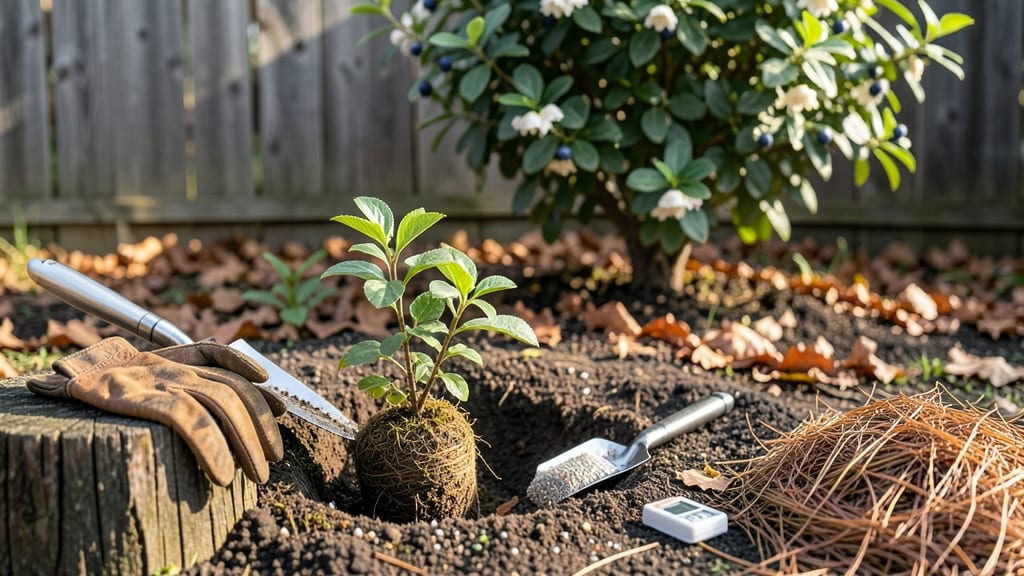
Timing your blueberry bush planting in Michigan isn't just about waiting for spring—it's about matching your variety to the region's unique chill hours and frost patterns. If you plant too early, a late frost could wipe out your young shrubs; too late, and they won't establish strong roots before winter.
The key is understanding when your 🫐 blueberry bush needs to be in the ground to thrive in Michigan's 5a-6b zones.
Most gardeners in Michigan aim for planting between late April and early June, but that window shifts depending on whether you're in the Upper Peninsula or Southern Michigan. Northern varieties like 'Bluecrop' need 800-1,000 chill hours, while newer low-chill types can handle Michigan's shorter winters.
The trick is balancing soil warmth with frost-free guarantees—something I'll help you pinpoint based on your specific location.
What sets Michigan apart is its unpredictable frost dates, which can arrive as early as mid-April or linger into May. That's why I'll walk you through how to read your local frost forecast, prepare your soil for acidic-loving blueberries, and choose the perfect planting window for your specific variety.
No more guessing games—just a foolproof timeline that works with Michigan's climate.
Once you've got the timing right, we'll cover the next critical steps: spacing your bushes for optimal airflow, mulching to protect roots, and establishing a watering schedule that prevents drought stress.
By the end, you'll know exactly when to plant your 🫐 blueberry bush to ensure a strong start and a harvest of sweet berries from late June through August.
Michigan’s best planting months for blueberry bushes based on chill hours
Michigan’s climate creates unique challenges for blueberry bushes, especially with its variable frost dates and chill-hour requirements. Most blueberry varieties need 400-1,000 chill hours (below 45°F) to produce fruit, and Michigan’s USDA Zones 5a-6b provide enough cold exposure—but timing matters.
Planting too early risks frost damage, while late planting delays fruit production.
For Southern Michigan (like Detroit or Kalamazoo), aim for late April to early May when soil temperatures reach 45°F+. In Northern Michigan (Traverse City or Marquette), wait until mid-May to early June due to later frost threats.
These windows align with when blueberries emerge from dormancy and soil is workable.
Blueberries thrive in acidic soil (pH 4.5-5.5), so test your soil before planting. If your soil is alkaline, amend it with peat moss or sulfur 2-3 months before planting. This preparation ensures your bushes have the right conditions to establish roots before Michigan’s unpredictable spring weather arrives.
| Region | Best Planting Window | Chill Hours Needed | Soil Prep Tip |
|---|---|---|---|
| Southern Michigan (Zones 5b-6a) | Late April - Early May | 500-800 hours | Add sulfur 2 months prior |
| Northern Michigan (Zones 4a-5a) | Mid-May - Early June | 600-1,000 hours | Use peat moss for drainage |
| Both Regions (Fall Planting) | September (containerized) | Same as above | Water deeply before frost |
Spring planting is ideal because it gives bushes 6-8 weeks to establish roots before Michigan’s first frost. However, fall planting in September works too—just use containerized plants (not bare-root) to avoid winter stress.
Water deeply after planting, and mulch with pine needles or wood chips to retain moisture and acidify the soil.
Popular Michigan-friendly varieties like ‘Bluecrop’ (600 chill hours) and ‘Jersey’ (500 chill hours) are perfect for most regions. For Northern Michigan’s colder zones, consider ‘Northblue’ (800 chill hours), which handles harsher winters. Always check the variety’s chill-hour range before buying to match your location.
If you’re planting bare-root bushes in early spring, soak the roots for 2-4 hours before planting to rehydrate them. For containerized plants, water thoroughly the day before transplanting. Both methods help reduce transplant shock in Michigan’s often-dry spring soils.
Michigan’s last average frost date ranges from mid-April (southern) to late May (northern), so monitor local forecasts. Use a frost-proof thermometer buried in the soil to track temperatures—plant when nighttime lows stay above 32°F consistently for a week.
Pro tip: Plant blueberries near companion plants like comfrey or ferns, which naturally acidify the soil. Avoid planting near walnut trees, as their roots release juglone, a toxin that stunts blueberry growth. Strategic placement maximizes your bushes’ success in Michigan’s climate.
Remember, blueberries are perennial plants, so proper planting now means decades of harvests. With the right timing and care, your Michigan garden can become a blueberry-producing powerhouse—just follow these chill-hour guidelines and frost-proof your planting schedule.
Frost-proof planting timeline: how to avoid late spring freezes in Michigan
Michigan’s late spring frosts can devastate newly planted blueberry bushes, so timing your planting to align with soil temperatures and frost-free dates is critical. Most regions experience their last average frost between mid-April and early May, but sudden cold snaps can linger into June—especially in northern Michigan.
To safely plant, wait until the soil temperature consistently stays above 45°F (7°C) for at least a week. Use a soil thermometer to check—this ensures roots establish before stress sets in.
In Zone 5a (Upper Peninsula), aim for late May; in Zone 6b (southern Michigan), mid-April to early May is ideal.
Blueberry bushes planted too early (before May 15) risk root damage or death if frosts return. Use frost cloth or mulch heavily (4–6 inches) for extra protection.
For bare-root plants, March is an option if you’re prepared to protect them with row covers or a cold frame until the ground warms. Containerized bushes, however, can handle September planting—just water deeply before the first frost (usually mid-October).
Monitor local frost forecasts via the Michigan State University Extension or National Weather Service. Their 10-day outlooks help predict safe windows. Pro tip: Plant on a cloudy day to reduce transplant shock from harsh sunlight.
After planting, apply a 3-inch layer of mulch (pine straw or wood chips) to insulate roots and retain moisture. This is especially vital in sandy Michigan soils, which dry out quickly. Mulch also suppresses weeds, reducing competition for nutrients.
If you miss the spring window, don’t panic—fall planting works too, but only if done 6–8 weeks before the first frost. This gives roots time to establish before winter dormancy. Just avoid planting in early fall (September), as new growth may not harden off before cold snaps.