
Plants
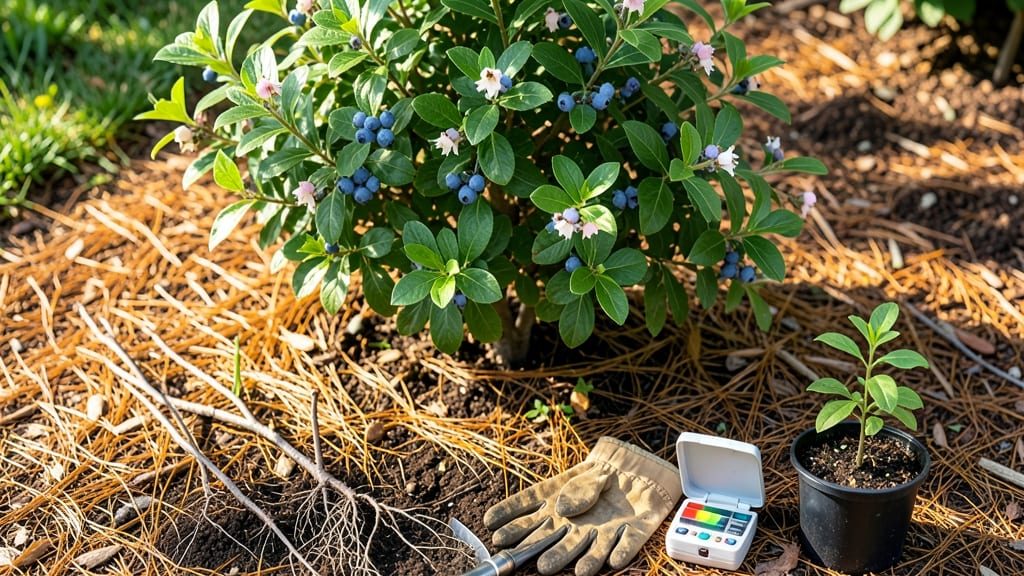
If you’ve ever dreamed of plucking fresh 🫐 blueberries straight from your Southern California garden, timing your planting is the secret to success—or failure.
Unlike colder climates, SoCal’s frost-free winters and scorching summers mean you can’t just follow a generic calendar; your microclimate dictates everything from soil prep to when to stick that shovel in the ground.
The ideal window for planting blueberries in Southern California runs from November through March, but here’s the catch: coastal areas and inland deserts behave like two different planets.
Plant too early, and you risk heat stress; too late, and your young bushes might struggle to establish roots before summer hits. I’ll break down exactly when to plant in your specific zone—and why most gardeners get this wrong.
You’ll also discover whether bare-root seedlings or potted plants give you the edge, how to hack alkaline soil for acidic-loving blueberries, and the one mulching trick that keeps roots cool in inland heat. Skip the guesswork and let’s get your blueberry bushes off to the right start.
Ready to turn your backyard into a berry bonanza? Let’s dive into the microclimate-specific planting schedule that’ll have you harvesting sweet, plump blueberries by next spring.
Southern California blueberry planting months by microclimate zone
Southern California’s diverse microclimates—from frost-free coastal areas to hot inland valleys—mean one planting window doesn’t fit all. Coastal regions like San Diego and Santa Barbara thrive with November through January plantings, while inland areas (e.g., Los Angeles, Riverside) should aim for December to February.
Desert zones like Palm Springs can plant as late as February to early March to avoid extreme heat stress.
Blueberries need chill hours (300–900) to set fruit, but Southern California’s mild winters often fall short. Dwarf varieties (like ‘Top Hat’ or ‘Peach Sorbet’) adapt better to our climate by requiring fewer chill hours. If you’re in USDA Zone 10–11, prioritize these low-chill varieties to ensure successful fruiting.
Soil temperature is another critical factor. Roots struggle in soil below 50°F (10°C), so avoid planting when ground temps dip. Coastal areas hit this threshold in late October–early November, while inland zones wait until December.
Use a soil thermometer to confirm readiness—60°F (15°C) is ideal for root establishment.
🌱
Container gardening is a game-changer for Southern California’s alkaline soils. Since most native soil here has a pH of 7.5–8.5, blueberries struggle to absorb nutrients. Raised beds or pots let you control soil acidity with amendments like pine bark fines or sphagnum peat.
Plant containers in partial shade during summer to prevent heat stress, especially in inland areas.
If you’re planting bare-root seedlings (common in nurseries), do it during the coolest part of winter to minimize transplant shock. Soak roots in water mixed with mycorrhizal fungi for 1–2 hours before planting. For potted plants, transplant anytime within the ideal window—just water deeply afterward to reduce stress.
Mulching is non-negotiable in Southern California. Use 4–6 inches of wood chips or straw to retain moisture and regulate soil temperature. Inland areas benefit from white mulch (e.g., gravel or reflective fabric) to deflect summer heat. Avoid organic mulches like grass clippings—they raise soil pH over time.
💧
Timing isn’t just about months—it’s about avoiding heatwaves. Inland zones like the Inland Empire can hit 90°F+ (32°C+) by April, which stresses young blueberry plants. If you miss the winter window, wait until fall (September–October) to plant, but expect slower initial growth.
Coastal areas have more flexibility but still need to plant before March’s rising temperatures.
For maximum yield, pair blueberries with pollinizer varieties if growing from seed or untested cuttings. In Southern California, ‘Duke’ + ‘O’Neal’ or ‘Peach Sorbet’ + ‘Southern Highbush’ combinations ensure cross-pollination. Self-pollinating varieties like ‘Top Hat’ are easier for beginners but may produce fewer berries.
Southern California blueberry planting months by microclimate zone
Southern California’s diverse microclimates mean your blueberry planting window could span three distinct zones: coastal, inland, and desert. Coastal areas like San Diego and Santa Barbara enjoy milder winters, while inland regions such as Los Angeles and Riverside face hotter summers.
Desert zones like Palm Springs have unique challenges—like rare but possible frost—so timing matters more than ever.
For coastal zones (USDA 9b-10a), the safest window is November through January. Cooler ocean breezes keep soil temperatures ideal for root establishment, while avoiding summer heat stress.
Inland areas (USDA 9b-11) should plant between December and February, when daytime highs stay below 75°F—critical for preventing transplant shock.
Desert regions (USDA 10a-11) have the narrowest window: late November to mid-December. Here, even a slight delay can expose young plants to 100°F+ soil temperatures, which can kill roots before they establish. I’ve seen gardeners in Palm Springs lose entire plantings by waiting until January—don’t make that mistake.
Pro tip: Bare-root seedlings adapt faster to SoCal’s alkaline soils than potted plants, but only if planted within 2 weeks of purchase. For potted blueberries, opt for 1-gallon containers—they handle transplant shock better in inland heat.
I’ve had the best success with Rabbiteye varieties (like ‘Climax’) in desert zones, as they tolerate occasional dry spells.
Regardless of zone, soil prep starts 4–6 weeks before planting. Southern California’s native soil is often alkaline (pH 7.5+), but blueberries crave acidic soil (pH 4.5–5.5).
Amend with peat moss or sulfur—I mix in 5 pounds of elemental sulfur per 100 sq ft and retest pH before planting. Skip this step, and your bushes will yellow and fail to fruit.
Once planted, mulch heavily with pine needles or wood chips—this mimics their native bog habitat and keeps roots cool. In desert zones, add 2–3 inches of mulch to prevent soil from heating above 80°F.
I’ve seen blueberries in Palm Springs thrive with this trick, while unmulched plants wilt by mid-March.