
Trees
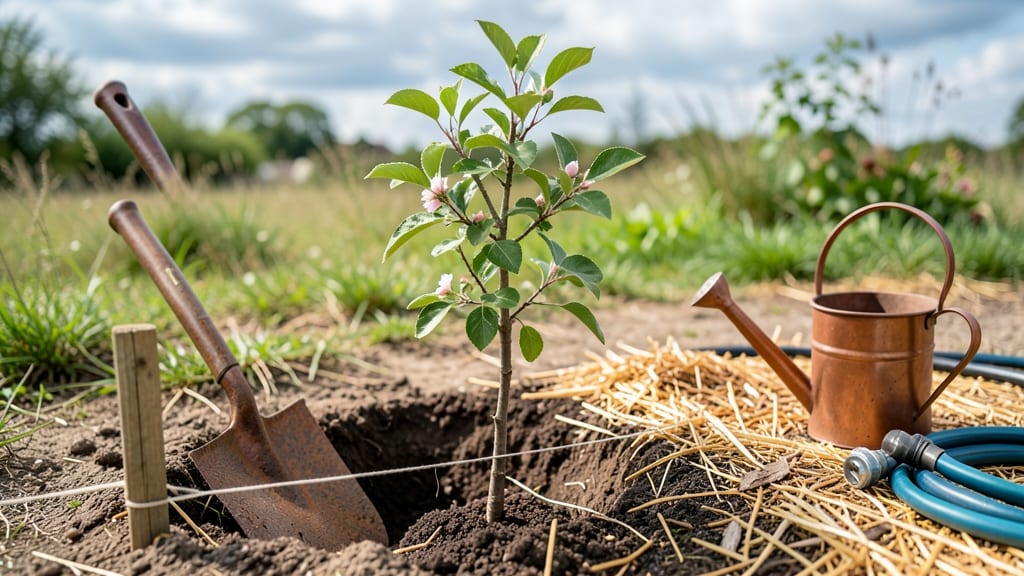
If you're dreaming of a backyard bursting with crisp, homegrown apples 🍎, knowing when to plant apple trees in zone 5 is everything—especially where frost can make or break your young tree.
Planting at the wrong time means struggling with weak roots, delayed fruit production, or even losing your investment to a late freeze.
Here’s the secret: Zone 5’s 500–1,000 chill hours and unpredictable frost dates (mid-May to late October) demand precision. Whether you’re planting bare-root saplings in early spring or container-grown trees in fall, the window is narrow—but mastering it guarantees a thriving orchard.
Let’s break down the exact months to plant, plus the critical steps to set your apple tree up for success.
You’ll discover why fall planting often outperforms spring in Zone 5, how to prep your soil for maximum drainage, and which cold-hardy varieties (like ‘Honeycrisp’ or ‘McIntosh’) handle your climate best.
Avoiding these mistakes could mean the difference between a 20-foot tree loaded with fruit and a struggling sapling that never reaches its potential.
Ready to turn your backyard into an apple orchard? I’ll walk you through the step-by-step process, including soil tests, spacing tips, and post-planting care to keep your tree healthy through winter. Let’s get started!
Optimal planting windows for apple trees in Zone 5 (by month & variety)
Zone 5 gardeners have two prime windows to plant apple trees: early spring (March–April) and fall (September–October). Each offers unique advantages—spring lets roots establish before summer heat, while fall gives trees time to harden off before winter.
The key? Avoid planting too late in fall (after 6–8 weeks before first frost) or too early in spring (before soil thaws).
For bare-root trees, spring planting is ideal because the soil is workable and frost isn’t imminent.
Container-grown trees, however, can handle fall planting better since their roots aren’t exposed. Dwarf varieties (like 'Honeycrisp' or 'Fuji') adapt faster to both windows, while standard varieties (e.g., 'Granny Smith') need extra care in spring to avoid transplant shock.
Here’s how to align your planting with Zone 5’s last frost dates (mid-April to late May) and first frost (mid-October). Planting in March or early April ensures roots establish before summer’s peak heat, while September or early October gives trees time to root before winter dormancy.
Late fall plantings (November) risk winter stress, especially for young trees.
Pro tip: Use mulch (4–6 inches) after planting to regulate soil temperature. In spring, it cools roots; in fall, it insulates them. For container-grown trees, water deeply 1–2 weeks before planting to reduce shock. Bare-root trees? Soak roots for 2–4 hours before setting them in the ground.
Now, let’s compare the best months for different apple tree types in Zone 5:
| Tree Type | Best Planting Months | Chill Hours Needed | Key Consideration |
|---|---|---|---|
| Dwarf Varieties (e.g., 'Honeycrisp', 'Gala') | March–April or September–October | 500–700 hours | Faster root establishment; ideal for small gardens |
| Semi-Dwarf (e.g., 'McIntosh', 'Red Delicious') | April or September–early October | 700–900 hours | Needs staking; plant after soil warms in spring |
| Standard (e.g., 'Granny Smith', 'Jonathan') | Early April or September | 900–1,200 hours | Deep roots; avoid late fall to prevent winter stress |
| Columnar (e.g., 'Columnar Honeycrisp') | March–April or September | 600–800 hours | Compact growth; plant in well-drained soil |
Zone 5’s chill hours (500–1,200) dictate which varieties thrive. For example, 'Honeycrisp' (700 hours) is perfect for Zone 5a, while 'Granny Smith' (1,000+ hours) works better in Zone 5b. Always check the variety’s chill requirements before buying—mismatches lead to poor fruit set or no harvests.
Local nurseries often stock Zone 5-hardy cultivars, so ask for recommendations!
Timing also affects pollination success. Plant two compatible varieties (e.g., 'McIntosh' + 'Honeycrisp') to ensure cross-pollination. If planting in spring, aim for early blooming varieties to align with Zone 5’s late April–May pollinator activity. Fall plantings? Choose late-blooming types to avoid frost damage to flowers.
One more pro tip: Test your soil’s pH (6.0–6.5 ideal) before planting. Zone 5 soils often lean acidic, so amend with lime (if pH < 6.0) or sulfur (if pH > 7.0) 2–3 months before planting.
This gives microbes time to adjust, ensuring your tree’s roots get the nutrients they need from day one.
Finally, spacing matters. Dwarf trees need 8–12 feet between plants, while standard varieties require 20–25 feet. Poor spacing leads to disease spread and reduced airflow, which is critical in humid Zone 5 summers. Plan your orchard layout now to avoid future headaches!
How chill hours and frost-free days determine your planting success
Zone 5’s 500–1,000 chill hours are non-negotiable for apple trees. These hours of 45°F or below trigger dormancy and ensure proper bud development. Varieties like 'Honeycrisp' or 'McIntosh' thrive here because they meet these requirements. If you plant outside this range, your tree may bloom early and suffer frost damage.
Timing your planting around frost-free dates (typically mid-April to late May in Zone 5) is equally critical. Planting too early risks exposing young roots to late frosts, while planting too late may delay root establishment before winter.
The sweet spot? Early spring (March–April) or fall (September–October) when soil is workable but temperatures are stable.
🌱 Chill hours aren’t just about survival—they also influence fruit quality. Trees with insufficient chill hours may produce smaller apples or fail to fruit altogether. For example, 'Fuji' apples need 700+ chill hours, while 'Cortland' adapts well to Zone 5’s 500–600 hours.
Always check a variety’s chill requirements before buying.
| Variety | Chill Hours Needed | Best Planting Window | Frost Risk |
|---|---|---|---|
| Honeycrisp | 600–800 | Early spring or fall | Moderate (late blooms) |
| McIntosh | 500–600 | Fall preferred | Low (hardy) |
| Cortland | 500–600 | Early spring | Low (early blooms) |
| Fuji | 700+ | Fall only | High (late blooms) |
For bare-root trees, plant in early spring (March–April) to give roots time to establish before bud break. Container-grown trees, however, handle fall planting (September–October) better—they’re less stressed and can develop roots before winter. Just avoid planting in late fall (November–December), as the ground may freeze before roots settle.
Pro tip: Use a frost calendar for your specific Zone 5 location. Tools like the USDA Plant Hardiness Zone Map or local agricultural extensions can pinpoint your last frost date.
For example, Chicago (Zone 5a) typically sees its last frost around April 20th, while Pittsburgh (Zone 5b) may wait until May 5th. Plant accordingly!
🌡️ Post-planting care hinges on these climate factors. After planting, mulch heavily to insulate roots from temperature swings. In spring, monitor for late frosts and protect blossoms with frost cloth if needed.
With the right timing, your apple tree will reward you with decades of harvests—not just a one-time gamble.