
Planting
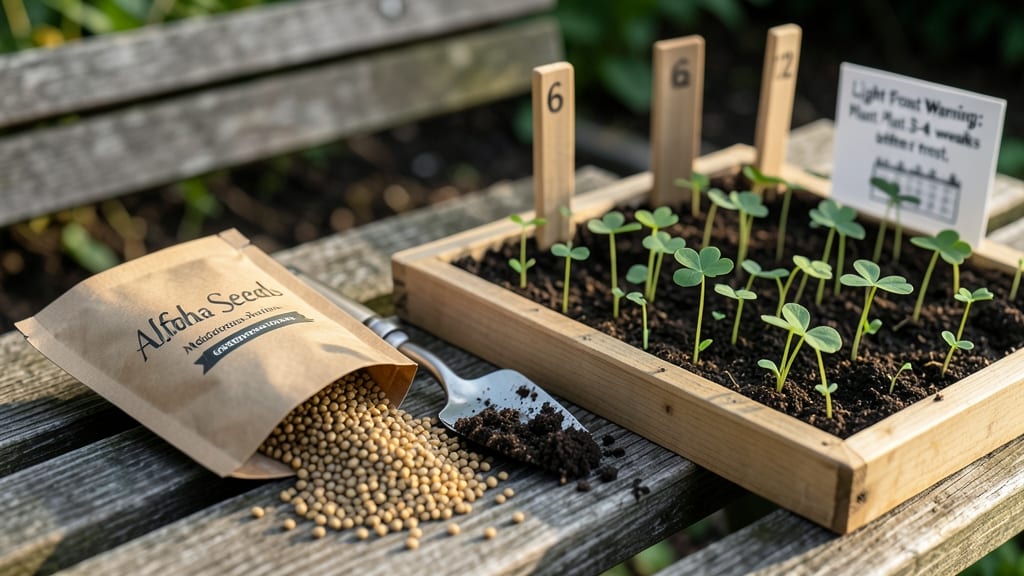
Timing when to plant alfalfa in spring just right can mean the difference between a thriving crop and wasted effort—get it wrong, and you risk frost damage or poor germination. With 🌱 alfalfa needing precise conditions, knowing when to plant in spring is the key to success.
Whether you're a seasoned gardener or just starting, understanding soil warmth and frost-free timing will set you up for a productive harvest.
Most gardeners in USDA Zone 6a should aim for early to mid-spring planting, but the exact timing depends on your last frost date and soil temperature. The ideal window opens when soil reaches 50-60°F, which typically falls between late March and early April in many regions.
This timing ensures your seeds germinate quickly and strong before summer heat sets in.
I've learned the hard way that planting too early can leave young alfalfa vulnerable to late frosts, while waiting too long might stunt growth before the first harvest. The solution? Monitor your local frost dates and soil conditions closely.
With the right preparation, you'll give your alfalfa the best possible start for a late summer to fall harvest in its second year.
In this guide, I'll walk you through everything from soil prep to post-planting care, so you can confidently plant your alfalfa at the perfect time. Let's make sure your hard work pays off with a lush, productive crop!
Ideal soil temperature and frost-free window for alfalfa planting
Alfalfa thrives when planted at the perfect intersection of warm soil and frost-free conditions. Unlike frost-sensitive crops, alfalfa can handle light chills but struggles when soil temperatures dip below 50°F.
The magic window? Aim for 50-60°F soil warmth combined with no more than 2-3 nights of freezing temps after planting.
In most U.S. regions, this aligns with late March to early May, but your exact timing depends on your USDA hardiness zone. For example, gardeners in Zone 3-4 may need to wait until mid-May, while those in Zone 8-10 can start as early as February.
Always check your local last frost date—planting too soon risks seed rot or poor germination.
Here’s the golden rule: Wait until soil reaches 50°F at a 4-inch depth. Use a soil thermometer to confirm—this tool is a game-changer for precision. I’ve learned the hard way that guessing leads to stunted seedlings or uneven growth.
Pro tip: Test soil in the morning for the most accurate reading.
Alfalfa’s deep root system means it needs well-draining soil with a pH between 6.5 and 7.5. Sandy loam is ideal, but if your soil is heavy clay, amend it with compost or aged manure 4-6 weeks before planting.
This gives microbes time to break down organic matter and improve aeration—critical for those early roots.
Another key factor is the frost-free period. Alfalfa needs at least 90-120 frost-free days to mature fully. In cooler climates (Zones 3-5), this might limit you to one harvest cycle per year, while warmer zones (6-10) can support multiple cuttings.
Plan accordingly: If your frost-free window is short, prioritize early-maturing varieties like ‘Moapa’ or ‘Ladak’.
🌱 Alfalfa Planting Conditions at a Glance
| Condition | Specification | Notes |
|---|---|---|
| Soil Temperature | 50–60°F (10–15°C) | Test at 4" depth; use a soil thermometer. |
| Last Frost Date | 2–3 weeks before planting | Avoid planting if frost is forecasted within 7 days. |
| USDA Zones | 3–10 (adjust timing) | Zones 3–5: Wait until mid-May; Zones 8–10: Can plant as early as February. |
| Soil pH | 6.5–7.5 | Test and amend with lime (to raise) or sulfur (to lower) 4–6 weeks before planting. |
| Sunlight Needs | Full sun (6–8+ hours/day) | Partial shade reduces yield and quality. |
One mistake I see often is planting alfalfa too early in cool climates. Seeds may sprout, but the seedlings yellow and die when nighttime temps drop below 40°F. To avoid this, use row covers or plant in microclimates (like near a south-facing wall) to trap warmth.
Another trick? Start seeds indoors 4–6 weeks before your last frost date, then transplant seedlings when soil is warm enough.
For container gardening, alfalfa can work in 5-gallon pots or larger, but ensure pots have drainage holes and use a lightweight potting mix. In containers, soil warms up faster than in-ground beds, so you can plant 2–3 weeks earlier than in your garden.
Just monitor soil temps closely—containers can also overheat in summer, stressing young plants.
Remember, alfalfa is a perennial in warm climates but often treated as an annual in colder zones. If you’re in Zone 6 or below, focus on establishing strong roots in year one so the plant can survive winter.
In warmer zones, it may regrow from the same crown for years, making early planting even more critical for long-term success.
Finally, don’t overlook seed quality. Old or stored seeds lose viability—aim for 85%+ germination rate for best results. If you’re unsure, do a germination test: Soak 10 seeds overnight, then place them between damp paper towels. Count how many sprout in 7–10 days to estimate your success rate.
Ideal soil temperature and frost-free window for alfalfa planting
Alfalfa thrives when planted in warm soil and after the last frost date—both critical factors for strong germination. The sweet spot for soil temperature is between 50-60°F, which typically occurs in early to mid-spring depending on your USDA hardiness zone.
In colder zones (3-5), aim for late April to early May, while warmer zones (7-10) can start as early as March.
Your frost-free window is just as important. Alfalfa seedlings are extremely frost-sensitive—even a light freeze can stunt growth or kill young plants. Check your local average last frost date (e.g., April 15 in Zone 6a) and wait 2-3 weeks afterward to ensure stable warmth.
This buffer gives soil time to warm and reduces damping-off risk.
| Climate Zone | Ideal Planting Month | Soil Temp Requirement | Frost-Free Buffer |
|---|---|---|---|
| Zones 3-5 (Cold) | Late April–Early May | 50–60°F (10–15°C) | 3+ weeks after last frost |
| Zones 6-7 (Temperate) | Early–Mid April | 50–60°F (10–15°C) | 2 weeks after last frost |
| Zones 8-10 (Warm) | March–Early April | 55–65°F (13–18°C) | 1 week after last frost |
🌱 Pro Tip: Use a soil thermometer to confirm warmth before planting!
Even in warmer climates, avoid planting too early—cool soil slows germination and attracts pests like cutworms. If your soil is still cold, consider starter fertilizer or a black plastic mulch to speed up warming. In containers, use a heated mat if your zone is chilly.
For organic gardeners, incorporate compost or aged manure 2-3 weeks before planting to boost soil temperature naturally. Alfalfa’s deep roots thrive in loose, well-draining soil, so avoid heavy clay unless amended. A quick pH test (aim for 6.5-7.5) ensures nutrients are available for germination.
Remember: Patience pays off with alfalfa. Rushing into planting before soil warms or frost risk passes often leads to poor stands or replanting. Mark your calendar with your local frost dates and soil temp trends—this simple step saves hours of frustration later.
Once you’ve nailed the timing, your alfalfa will reward you with lush growth and nitrogen-rich soil for years to come. Happy planting! 🌿