
Companion Plants
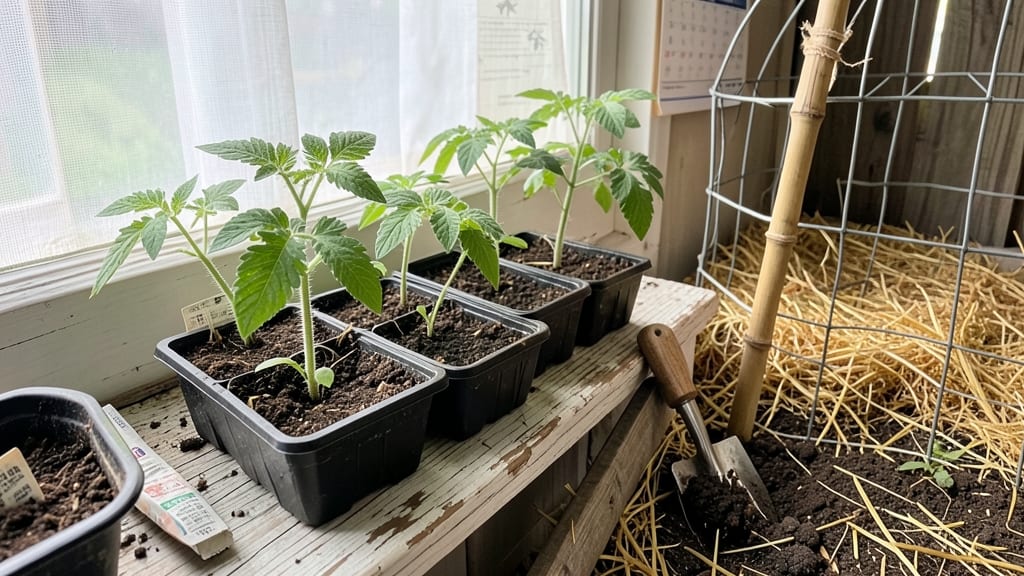
If you're asking "when should I plant tomatoes in Missouri", timing is the secret weapon between a thriving 🍅 harvest and wasted effort. Missouri's USDA Zone 6a climate means you can't afford to plant too early—frost will kill tender seedlings—but waiting too long risks a shorter harvest season.
Most gardeners in Missouri start transplanting tomatoes after April 15, once soil temperatures hit 60°F and all frost danger has passed. But here's the catch: Northern Missouri's last frost often lingers longer than the southern part of the state, so your exact window depends on where you're planting.
Whether you're starting seeds indoors or buying sturdy transplants, this guide breaks down the exact weeks before last frost for your region—plus pro tips to extend your growing season. We'll cover everything from soil prep to frost protection so you can maximize your yield from June through October.
The key to Missouri tomato success? Planting at the right time—and knowing how to adapt when spring surprises you. Let's get your plants in the ground with confidence so you can enjoy homegrown tomatoes all season long.
Missouri’s last frost dates by region: exact weeks before planting tomatoes
Missouri’s last frost dates vary dramatically by region—from March 15 in southern Missouri to April 30 in northern areas. These differences mean your tomato planting window shifts from mid-March in the Bootheel to mid-May in the Ozarks.
For most gardeners, this translates to a 4-6 week difference in when to transplant seedlings outdoors.
Using USDA Zone 6a as a baseline, Missouri spans from Zone 5b in the north to Zone 7a in the south. This variability means you can’t rely on a single date—your local microclimate (urban heat islands, river valleys, or hilltops) can shift frost dates by 1-2 weeks either way.
Always check historical frost data from your county extension office for the most accurate timeline.
Here’s how to calculate your ideal transplant window: Subtract 2-3 weeks from your average last frost date to account for seedlings needing 60-70°F soil and 10-14 days to establish roots post-transplant. For example, if your last frost is April 15, aim to transplant by April 1-7.
Missouri’s 2024 trends suggest slightly earlier springs due to climate shifts, but late frosts (like the May 2023 freeze in St. Louis) remain a risk. To hedge your bets, I recommend preparing backup frost protection (like row covers) until May 10 in most regions.
🌱
For northern Missouri, where late frosts are more common, I recommend waiting until May 1 to transplant—even if soil is warm.
In southern Missouri, you can start direct-sowing as early as March 20 for fast varieties like 'Early Girl', but always use black plastic mulch to protect young plants.
Pro tip: Use a soil thermometer to confirm 60°F+ soil temps before planting. Cold soil slows germination and invites damping-off disease. I’ve seen seedlings rot in 55°F soil even when air temps were perfect.
Missouri’s first frost typically arrives October 15, but some years it hits as early as September 20. To maximize your harvest, choose early-maturing varieties (like 'Stupice') or use season
Missouri’s last frost dates by region: exact weeks before planting tomatoes
Missouri’s last frost dates vary dramatically across its 6 USDA zones, from Zone 5b in the north to Zone 7a in the Bootheel. For tomatoes—sensitive to 28°F frost—this means your planting window shifts by 3-4 weeks from St. Louis to Kansas City.
Understanding these dates helps you avoid seedling losses while maximizing your harvest season.
Most Missouri gardeners aim to transplant tomato seedlings 2-3 weeks after the average last frost date, when soil temperatures hit 60°F+. This gives plants time to establish roots before summer heat arrives.
For direct sowing (planting seeds outdoors), wait until soil is 70°F+—typically 1-2 weeks later than transplanting.
🌱Pro Tip: Use a soil thermometer to confirm readiness. Cold soil slows germination and stunts growth, even if air temperatures seem warm.
| Region | Avg. Last Frost | Safe Transplant Window | Direct Sow Window | Notes |
|---|---|---|---|---|
| Northern MO (Zone 5b-6a) | April 15 | May 1–15 | May 20–June 1 | Use row covers for early starts. |
| St. Louis (Zone 6a) | April 1 | April 15–May 1 | April 30–May 15 | Urban areas warm faster; monitor soil temps. |
| Kansas City (Zone 6b) | March 25 | April 10–25 | April 20–May 1 | Early varieties like 'Early Girl' thrive here. |
| Columbia (Zone 6a) | April 10 | April 25–May 10 | May 1–15 | Humid climate; prioritize disease-resistant varieties. |
| Southeast MO (Zone 7a) | March 15 | March 30–April 15 | April 1–15 | Longest growing season; can plant succession crops. |
Missouri’s microclimates can shift planting dates by 10+ days. For example, south-facing slopes warm 1-2 weeks earlier than valleys, while urban heat islands (like St. Louis) may allow earlier planting. Check local Cooperative Extension data or use frost-free calculators like the Old Farmer’s Almanac for your exact ZIP code.
If you’re starting seeds indoors, begin 6-8 weeks before your region’s last frost date. For northern Missouri, that’s late February to early March, while southern regions can start seeds as early as January.
Use grow lights to prevent leggy seedlings—natural light alone may not be sufficient in winter.
🌿Remember: Even after the last frost, late spring frosts (common in Missouri) can still damage young plants. Have row covers or cloches ready for emergency protection until plants are 12+ inches tall.