
Plants
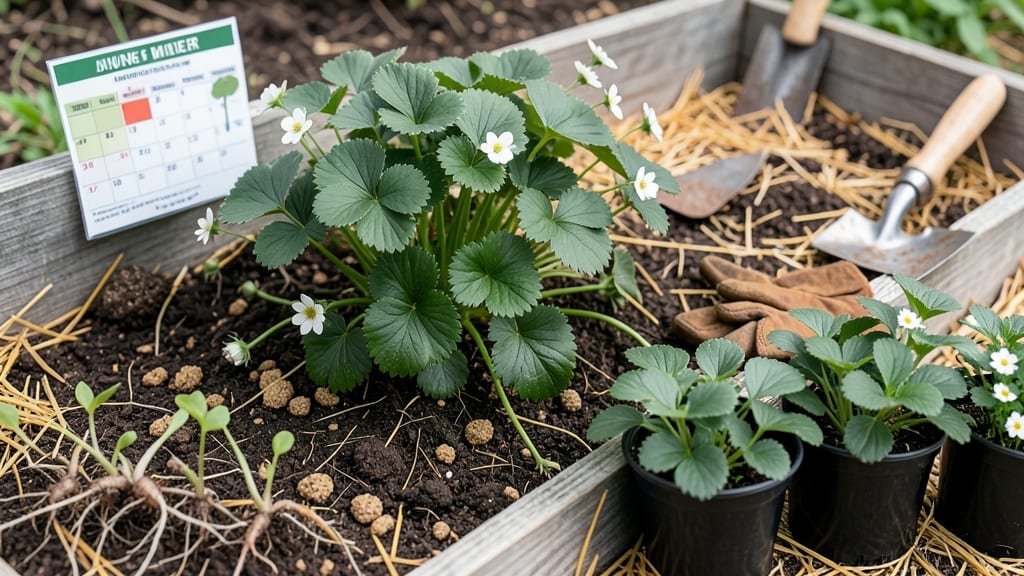
Timing your strawberry planting in Tennessee isn't just about picking a month—it's about matching your garden to the state's 6a-8a zones and avoiding the pitfalls of early frosts or scorching summer heat.
Whether you're planting bare-root 🍓 crowns in March or potted varieties in July, getting it wrong can mean the difference between a bountiful harvest and a sad, wilted experiment.
Tennessee's climate varies dramatically from the cooler Appalachian highlands to the warmer Gulf Coast regions, making one-size-fits-all advice risky. The key lies in understanding chill-hour requirements—everbearing varieties need 450-600 hours below 45°F, while June-bearing types thrive with 600-800 hours.
Plant too early, and frost will nip your progress; too late, and summer's heat will stress your plants before they even fruit.
In this guide, I'll break down the exact windows for both spring and fall planting, including how to adjust for your specific Tennessee location.
You'll learn which varieties perform best in your zone, how to extend your planting season with simple tricks, and why some gardeners end up with bitter disappointment—so you can avoid their mistakes.
Ready to grow sweeter, healthier strawberries? Let's dive into the science and timing that will transform your garden from a gamble to a guaranteed success. Your first harvest could be just 60 days away!
Tennessee’s strawberry planting timeline by chill-hour zones
Tennessee’s strawberry planting success hinges on chill hours—the number of hours below 45°F a plant needs to break dormancy.
The state spans USDA Zones 6a-8a, creating three distinct regions with wildly different deadlines. June-bearing varieties (like ‘Chandler’) need 600-800 chill hours, while everbearing types (like ‘Albion’) thrive with 450-600 hours. Planting outside these ranges means wasted money or stunted growth.
To find your exact chill-hour zone, check the USDA Plant Hardiness Zone Map and cross-reference with local Cooperative Extension Service data. For example, Northeast Tennessee (Zone 6a) gets 800+ chill hours, while Memphis (Zone 7b) averages just 500-600 hours.
This 100-hour difference can mean the gap between a bountiful harvest and a failed patch.
In Tennessee, you’ve got two prime planting windows: early spring (March-April) and late summer (July-August). Spring planting lets strawberries establish roots before summer heat, while fall planting avoids pests like slugs and disease pressure.
However, fall planting must finish 4-6 weeks before first frost—typically by October 15 in most regions.
Here’s the golden rule: Soil temperature must stay above 40°F for roots to grow. Use a soil thermometer to confirm—planting in cold, wet soil causes root rot. In Zone 6a, aim for March 1-15; in Zone 8a, wait until February 15-March 1.
| Chill-Hour Zone | USDA Zones | Best Planting Window | Variety Recommendations | Key Consideration |
|---|---|---|---|---|
| 450-600 | 7b-8a (West TN) | Feb 15 - Mar 15 | Albion, Seascape, Fort Laramie | Avoid June-bearing; heat stress risk |
| 600-800 | 6b-7a (Middle TN) | Mar 1 - Apr 15 | Chandler, Jewel, Ozark Beauty | Perfect for June-bearing; reliable yields |
| 800+ | 6a (East TN) | Mar 15 - Apr 30 | Allstar, Benton, Honeyoye | Longer dormancy; plant early |
For everbearing varieties, you can plant twice a year—once in spring and again in late summer (July-August). This double harvest strategy works best in Zones 7b-8a, where summers are hot but not extreme. Just space plants 18-24 inches apart to prevent crowding and disease spread.
If you’re planting bare-root strawberries, soak roots in lukewarm water for 1-2 hours before planting to revive dormancy. For potted plants, gently loosen roots at the bottom to encourage spread.
Both methods need well-draining soil—amend clay soil with compost or sand to avoid waterlogged roots.
Pro tip: Use straw mulch (not hay) to insulate roots in early spring and keep berries clean. In Zone 8a, where winters are mild, plant everbearing varieties in fall (September) to skip winter dormancy and harvest sooner.
Timing also affects harvest windows. June-bearing varieties planted in March yield in May-June, while fall-planted everbearers fruit in late summer. Miss the 4-6 week pre-frost rule, and your fall plants won’t survive—or worse, bolt to flower early and produce tiny, bitter berries.
One common mistake Tennessee gardeners make? Planting too close to frost dates. Even if soil is warm, air temperatures below 50°F at night can stunt growth. Use a frost watch app or local NOAA alerts to adjust your timeline.
Critical mistakes Tennessee gardeners make with strawberry planting
Planting strawberries in Tennessee isn’t just about picking a month—it’s about avoiding common pitfalls that can ruin your harvest. Many gardeners overlook frost dates, heat zones, or the type of strawberry they’re growing, leading to wasted time and money.
Let’s break down the biggest mistakes and how to avoid them.
One of the most common errors is planting too early in spring. If you put strawberries in the ground 4-6 weeks before the last frost (usually around March 15), they can get nipped by late frosts.
This weakens the plants and delays fruiting. Nashville’s urban heat islands can also trick gardeners into thinking it’s warmer than it is—always check your microclimate.
Another mistake is planting June-bearing varieties in fall.
These need chill hours (300-1,000 depending on the variety) to set fruit, so planting them too late in the season means they won’t produce well. Everbearing or day-neutral varieties, however, can handle fall planting better because they don’t rely as heavily on chill hours.
Here’s the worst offense: ignoring soil temperature. Strawberries need soil that’s at least 40°F (4°C) to thrive. Planting in cold soil stunts root growth, leaving your plants vulnerable to disease. Use a soil thermometer to check before planting—especially in eastern Tennessee’s cooler zones.
⚠️ Watch Out for These Planting Pitfalls
- Planting too early: Risk frost damage to new growth.
- Skipping soil prep: Compacted or poor soil = weak roots.
- Overcrowding plants: Leads to disease and small berries.
- Ignoring variety needs: June-bearing vs. everbearing have different timing.
- Not mulching: Bare soil heats up, stressing roots in summer.
Pro Tip: Test your soil pH (ideal: 5.5-6.8) before planting—acidic soil blocks nutrient uptake.
Many Tennessee gardeners also make the error of planting strawberries in low-lying areas where cold air pools. This creates frost traps, killing tender new growth. If your yard has dips or valleys, opt for raised beds or slopes to improve airflow and warmth.
Even a 6-inch elevation change can protect plants from late frosts.
Finally, don’t assume container-grown strawberries have the same timing as bare-root plants. Potted strawberries can be planted 2-3 weeks later than bare-root because their roots are already established. This flexibility helps avoid spring’s unpredictable weather swings. Always check the root ball’s moisture before planting—dry roots struggle to adapt.
By avoiding these mistakes, you’ll give your strawberries the best shot at thriving in Tennessee’s USDA zones 6a-8a. Pay attention to your local microclimate, variety requirements, and soil conditions, and you’ll enjoy a bountiful harvest instead of disappointment. 🌱