
Watering
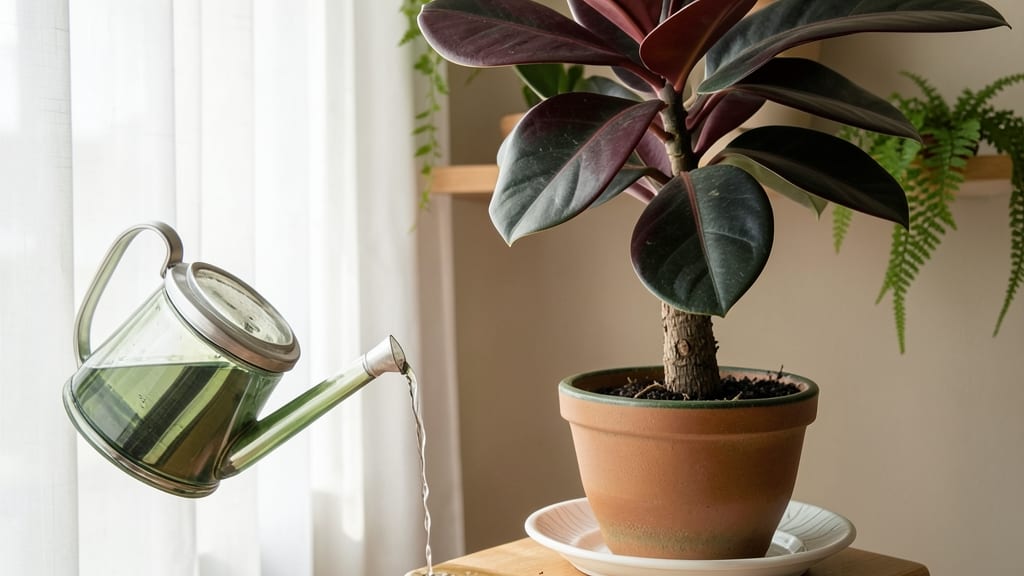
Figuring out how much water your rubber plant 🌿 needs can feel like solving a mystery—too much and you risk root rot, too little and those glossy leaves lose their luster.
The truth is, this hardy houseplant thrives on balance, and getting it right makes all the difference in keeping your plant happy and growing.
I’ve learned the hard way that rubber plants (Ficus elastica) don’t follow a one-size-fits-all watering schedule. Factors like pot size, humidity, and even the season play a huge role in how often you should water.
What works in the steamy summer months won’t cut it during winter’s dry air, and that’s where most plant parents go wrong.
In this guide, I’ll break down exactly how to water your rubber plant—from testing soil moisture to adjusting your routine based on the season. You’ll discover the key signs your plant is thirsty (or drowning) and how to fix common watering mistakes before they cause damage.
Whether you’re a beginner struggling to keep your plant alive or a seasoned gardener looking to refine your routine, these tips will help you master the art of watering. Let’s get your rubber plant thriving with the perfect balance of moisture and care.

How often to water a rubber plant based on season and soil
Rubber plants (Ficus elastica) thrive on a consistent but cautious watering routine. Unlike thirsty succulents, they prefer their soil to dry out slightly between waterings—but not completely. The key is balancing moisture with aeration to prevent root rot while keeping leaves lush and vibrant.
As someone who’s nursed more rubber plants than I can count, I’ve learned that seasonal adjustments and soil type are everything.
In spring and summer, when growth is most active, your rubber plant will drink more water. That means watering every 7–10 days—but only if the top 1–2 inches of soil feel dry. Think of it like a sponge: squeeze it until it’s damp but not dripping.
Overwatering here is a silent killer, causing yellow leaves and mushy stems. I’ve seen it too many times, and trust me, you don’t want to make that mistake.
Now, let’s talk soil moisture tests. Stick your finger about an inch into the soil. If it feels dry, it’s time to water. If it’s still damp, wait another day or two.
Pro tip: Use a moisture meter for accuracy, especially if you’re new to rubber plants. I swear by mine—it’s saved my plants from both drowning and dehydration.
During fall and winter, your rubber plant enters a dormant phase. Growth slows, and so does water uptake. This is when you should water every 2–4 weeks, depending on your home’s humidity.
If your heater is running nonstop, the air will dry out faster, so check the soil more often. A pebble tray under the pot can help maintain moisture without overwatering.
Here’s where soil type comes into play. Rubber plants love well-draining, aerated soil. A mix of potting soil, perlite, and orchid bark works wonders. Avoid heavy, clay-based soils that trap moisture and invite root rot.
I’ve had rubber plants in both types, and the difference is night and day—literally. The right soil keeps roots happy and healthy.
Let’s not forget about pot size. A small pot dries out faster than a large one, so adjust your watering schedule accordingly. If you repotted your rubber plant recently, it might need less water until the roots adjust.
And always use a pot with drainage holes. No exceptions. I’ve seen too many well-meaning gardeners skip this step, and it’s a recipe for disaster.
One more thing: water quality matters. Rubber plants are sensitive to chemicals like chlorine and fluoride found in tap water. If your water is hard, let it sit out for 24 hours before using or opt for filtered or distilled water.
I’ve noticed a huge difference in leaf shine and growth when I switched to filtered water for my rubber plants.
Finally, observe your plant’s leaves. Drooping leaves often mean thirst, while yellow or brown edges signal overwatering. A healthy rubber plant has deep green, glossy leaves. If yours look dull or wrinkled, it’s time to reassess your watering routine. Trust your eyes—they’re your best tool.
| Season | Watering Frequency | Soil Check | Signs of Overwatering |
|---|---|---|---|
| Spring | Every 7–10 days | Top 1–2" dry | Yellow leaves, mushy stems |
| Summer | Every 7–10 days | Top 1–2" dry | Root rot, leaf drop |
| Fall | Every 14–21 days | Top 2–3" dry | Brown leaf tips |
| Winter | Every 21–28 days | Top 3–4" dry | Wrinkled leaves |
Adjust based on humidity, pot size, and soil type
If you’re still unsure, here’s a foolproof method: bottom watering. Place your pot in a tray of water for 10–15 minutes, then drain any excess.
This ensures the roots get hydrated without soggy soil. I’ve used this technique with great success, especially for finicky plants. It’s a game-changer for beginners.
Remember, rubber plants are resilient but not indestructible. A little patience and observation go a long way. Start with these guidelines,
How often to water a rubber plant based on season and soil
Your rubber plant’s watering needs change with the seasons and soil conditions, so there’s no single answer to how often to water it.
In summer, I water mine every 7–10 days when the top inch of soil feels dry, while winter slows growth and cuts watering to every 3–4 weeks. The key is always checking the soil first—never on a schedule alone.
Rubber plants (Ficus elastica) prefer their soil to dry out slightly between waterings. I use my finger to test moisture: if the top 1–2 inches of soil feel dry, it’s time to water.
Overwatering is the biggest mistake, as soggy soil leads to root rot, while underwatering causes leaves to wrinkle and drop.
Seasonal adjustments are critical. During spring and fall, I water every 10–14 days—enough to keep the soil lightly moist but never saturated. In winter, when growth slows, I reduce watering to every 3–4 weeks to prevent fungal issues.
Humidity also plays a role: dry indoor air means more frequent watering.
Pot size matters too. A smaller pot dries out faster, so I water mine every 7–10 days in summer, while larger pots may need watering every 2–3 weeks. Always use a pot with drainage holes to prevent waterlogging, and choose a well-draining potting mix with perlite or orchid bark.
Pro tip: I water my rubber plant in the morning to let excess moisture evaporate during the day. Avoid watering at night, as damp leaves can encourage fungal diseases. If you notice yellow leaves or drooping, adjust your routine—it’s usually a sign of overwatering or poor drainage.
Remember, rubber plants are resilient. If you accidentally overwater, let the soil dry out completely before watering again. With the right balance, your plant will reward you with glossy, vibrant leaves for years to come. 🌿