
Plants
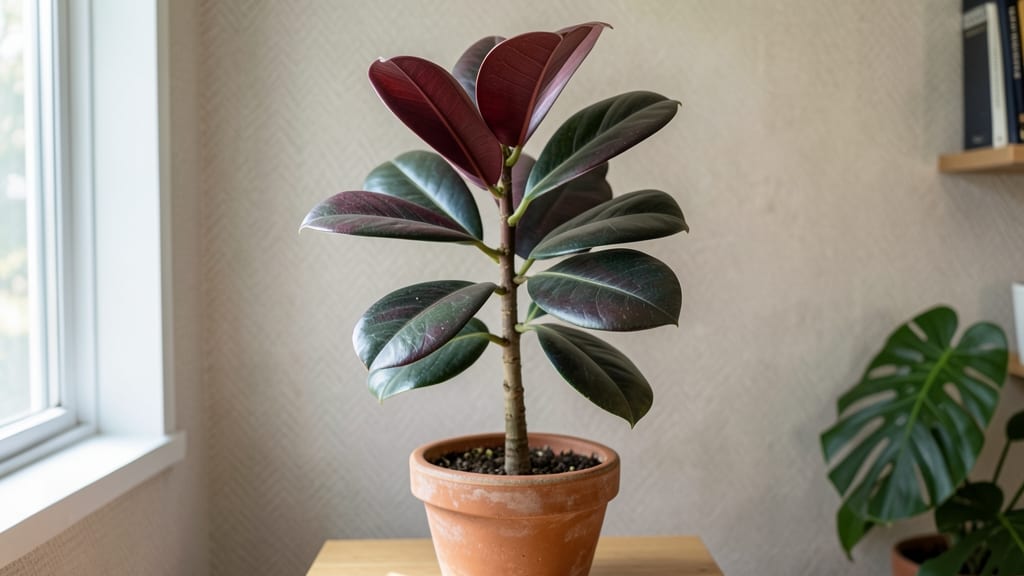
Curious about how tall your rubber plant 🌿 could grow? The answer depends entirely on its variety and care—some stay compact while others become towering indoor giants, reaching heights that might surprise you.
If you're wondering whether your rubber plant will stretch toward the ceiling or stay manageable, the key lies in its growing conditions. With the right light, pruning, and care, you can influence its height dramatically—whether you want a statement piece or a smaller, more manageable houseplant.
From the petite 'Decora' variety to the bold 'Black Prince', each rubber plant has its own growth potential. I’ll break down what to expect for each type, so you can plan your space and care routine accordingly.
Ready to learn how to control its size? Whether you're dealing with indoor growth or outdoor conditions, these tips will help you manage your rubber plant’s height like a pro.


Rubber plant height by variety: small to giant growth expectations
If you’re dreaming of a lush, leafy giant or prefer a compact houseplant, your rubber plant (Ficus elastica) variety makes all the difference. Some varieties top out at just 3 feet, while others can reach 10 feet or more indoors with proper care.
The key? Choosing the right cultivar and understanding its growth potential from the start.
Rubber plants grow slowly but steadily—typically 6-12 inches per year—so their mature height depends on both genetics and your care routine. For example, the 'Decora' variety stays modest, while 'Black Prince' can become a dramatic statement piece.
Let’s break down the height expectations for six popular varieties so you can pick the perfect fit for your space.
🌱 Pro Tip: Most rubber plants can live for decades with proper care, so their height is a long-term investment. Plan ahead if you’re eyeing a ceiling-height specimen!
| Variety | Mature Height (Indoors) | Growth Rate | Best For |
|---|---|---|---|
| 'Decora' | 3–5 ft | Slow (4–6 in/year) | Small spaces, offices |
| 'Black Prince' | 6–10 ft | Moderate (6–12 in/year) | Dramatic focal points |
| 'Burgundy' | 5–8 ft | Moderate (5–10 in/year) | Medium rooms, hallways |
| 'Variegata' | 4–7 ft | Slow (3–8 in/year) | Bright light lovers |
| 'Robusta' | 8–12 ft | Fast (8–15 in/year) | Large rooms, green walls |
| 'Tineke' | 3–6 ft | Slow (4–7 in/year) | Beginners, low-light areas |
🌿 Height Note: Outdoor growth can exceed indoor heights by 20–30% in ideal climates.
My 'Robusta' rubber plant is a prime example of how variety matters. When I brought it home as a 1-foot cutting, I had no idea it would now tower over my 8-foot ceiling!
This variety is a growth powerhouse, adding up to 15 inches per year when given plenty of bright indirect light and nutrient-rich soil.
On the flip side, my 'Tineke' variety—with its stunning pink-and-green variegation—stays a manageable 4–5 feet tall. It’s perfect for my sunny kitchen windowsill, where it thrives without becoming unruly.
The trade-off? Variegated varieties like 'Tineke' often grow 10–20% slower than solid-green types due to their higher energy demands for leaf coloration.
If you’re working with limited space, consider pruning young to encourage bushier growth. Even 'Robusta' can be kept under 6 feet with regular trimming. Just be prepared to propagate those cuttings—rubber plants root easily in water, so you’ll have free plants to share with friends!
For outdoor growers, height expectations shift dramatically. In USDA Zones 10–12, rubber plants can reach 15–20 feet outdoors, resembling small trees. But in cooler climates, they’ll stay more compact unless grown in containers and brought indoors during winter.
🌳 Height Hack: Want a taller rubber plant? Place it near a south-facing window and fertilize every 4–6 weeks during spring/summer. For a shorter plant, limit light to bright indirect and prune the top 1/3 of the stem to encourage branching.
Factors that control rubber plant height: pruning, light, and care secrets
Your rubber plant’s height isn’t set in stone—it’s shaped by the care you provide. Light exposure is the #1 factor: plants in bright, indirect light grow 30-50% taller than those in dim corners.
A south-facing window can push a Ficus elastica to 10 feet in 5 years, while a north-facing spot may keep it under 6 feet. Even the soil mix matters—well-draining, nutrient-rich soil fuels faster vertical growth, while compacted or poor soil stunts height gains.
Pruning is your secret weapon for controlling height. Pinching back the top 2-3 inches of new growth encourages bushier, fuller growth instead of one long stem. For dramatic height control, prune 1/3 of the stem in early spring—this triggers lateral branching and keeps your plant 3-5 feet shorter than it would otherwise reach. Just be ready for new growth to sprout from old cuttings, which you can propagate into baby plants!
Don’t overlook fertilizer timing. A balanced 10-10-10 fertilizer applied every 4-6 weeks during spring and summer boosts growth by 20-30%. Skip fertilizing in fall and winter, though—your plant’s energy shifts to survival, not height spikes.
Over-fertilizing? That’s a one-way ticket to root burn and stunted growth, so always follow the "less is more" rule for houseplants.
Temperature plays a sneaky role too. Rubber plants thrive in 65-80°F ranges—cooler temps slow growth, while heat (above 85°F) can cause leaf drop and stunted height. If you’re growing yours near a heating vent or AC unit, expect 10-20% slower vertical growth.
Humidity matters too: Low humidity (<40%) leads to crispy edges and slower growth, while high humidity (60%+) keeps leaves lush and encourages steady height gains.
Want a compact rubber plant? Combine low-light placement, regular pruning, and smaller pots (just 1-2 inches bigger than the root ball). This forces the plant to focus energy on leaf density over height.
For a tall, dramatic specimen, give it bright light, fertile soil, and spacious pots—your plant will reward you with 6-10 feet of lush, vertical growth in just a few years.
Pro tip: Rotate your plant every 2-3 weeks to ensure even growth. Without rotation, rubber plants grow lopsided, with one side stretching toward the light while the other stays weak. A well-cared-for plant isn’t just tall—it’s balanced, bushy, and thriving from top to bottom. 🌿