
Plants
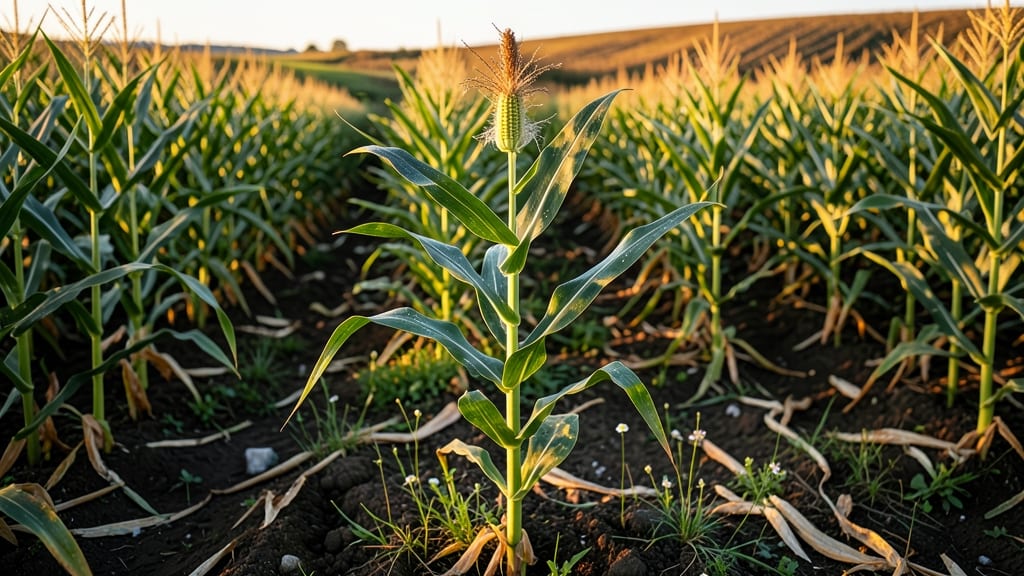
If you're planning your garden layout this spring, knowing how tall does a corn plant grow is one of the first questions you need to answer. That towering 🌽 you imagine might not fit in your backyard unless you pick the right variety—some stay compact while others reach basketball-hoop heights!
Most gardeners assume all corn plants grow skyward, but the truth is far more interesting. Sweet corn varieties like 'Golden Bantam' top out around 5-7 feet, while field corn can stretch to 10 feet or more.
This dramatic difference means your space planning should start with variety selection, not just soil prep.
What you might not realize is that height affects more than just your garden's layout. Taller corn needs stronger stalks and deeper roots, which means soil quality, sunlight exposure, and even watering habits play critical roles in determining how big your plants will grow.
Whether you're working with a small urban plot or a spacious rural field, understanding these height variations will help you choose the perfect corn for your space—and set you up for a bountiful harvest from July through September.


Corn height ranges by variety: from dwarf to giant stalks
Corn plants can transform your garden from a cozy backyard to a towering jungle—literally! While most people picture 8-foot stalks when they think of corn, the reality spans from 3-foot dwarfs to 12-foot giants.
The variety you choose determines not just height but also yield, ease of care, and even harvest method. Let’s break down the spectrum so you can pick the perfect fit for your space and goals.
First, understand that sweet corn (the kind you eat) and field corn (used for animal feed or industrial products) grow differently. Sweet corn varieties tend to be shorter and more manageable for home gardens, while field corn can reach impressive heights.
Even within sweet corn, heights vary wildly—some varieties barely top your head, while others dwarf basketball hoops. Your choice depends on whether you’re growing for fresh eating, storage, or just the fun of watching them grow.
Here’s the key: dwarf varieties like 'Little and Lovely' max out at 3-5 feet, making them ideal for containers or small urban gardens. Semi-dwarf varieties such as 'Golden Bantam' reach 5-7 feet, perfect for backyard plots with limited space.
Meanwhile, standard sweet corn like 'Silver Queen' or 'Peaches and Cream' can stretch 7-10 feet, requiring more room and sturdy supports. Field corn varieties often exceed 10 feet, with some experimental hybrids reaching 12+ feet—though these are rarely grown by home gardeners.
| Variety Type | Mature Height | Best For | Spacing Needs |
|---|---|---|---|
| Dwarf Sweet Corn | 3–5 ft | Containers, small gardens | 12–18" apart |
| Semi-Dwarf Sweet Corn | 5–7 ft | Backyard plots, urban gardens | 24–30" apart |
| Standard Sweet Corn | 7–10 ft | Traditional gardens, large plots | 30–36" apart |
| Field Corn | 10–12+ ft | Farm plots, large-scale growing | 36–48" apart |
If you’re growing corn in containers, stick to dwarf varieties like 'Tom Thumb' or 'Golden Midget,' which stay under 5 feet. These are bred for compact growth and can thrive in 5-gallon buckets or large pots, provided they get enough sunlight.
For traditional gardens, semi-dwarf or standard varieties offer the best balance of height and manageability, while field corn lovers need to plan for wide rows and tall supports.
Height also affects harvesting ease. Taller corn requires ladders or sturdy stools to reach the ears, while dwarf varieties let you pick at waist level.
Consider your mobility and comfort—there’s nothing worse than twisting your back to harvest a 10-foot stalk when a 5-foot variety would work just as well. Plus, shorter plants are easier to pollinate manually if you’re growing heirloom or rare varieties.
One common misconception is that taller corn always means better yield. In reality, bush corn varieties (a newer category) produce multiple ears per stalk and stay shorter, often outperforming tall varieties in small spaces.
For example, 'Bodacious' bush corn grows 5-6 feet tall but yields 2-3 ears per plant, compared to 1 ear on a 10-foot stalk. This makes it a game-changer for space-limited gardeners.
For ornamental or novelty growing, consider blue corn or rainbow corn varieties, which often grow taller than standard sweet corn (up to 10 feet) but offer stunning visual appeal. These are perfect for landscaping or cut-flower arrangements, though they may not be as productive for eating.
Always check the seed packet for height expectations—some "heirloom" varieties can surprise you with their stature!
Pro tip: If you’re new to growing corn, start with a semi-dwarf variety like 'Country Gentleman' or 'Ambrosia.' These strike a balance between height (6-8 feet) and productivity, giving you a manageable plant that still feels like a classic corn experience.
Once you’ve mastered the basics, you can experiment with dwarfs or giants to suit your garden’s personality.
🌽
Corn height ranges by variety: from dwarf to giant stalks
Corn plants can grow anywhere from a compact 3 feet to towering 10+ feet, depending entirely on the variety you choose. If you're working with limited space, dwarf varieties like 'Little and Lovely' (3-5 ft) are perfect for containers or small gardens.
Meanwhile, traditional sweet corn like 'Silver Queen' or 'Peaches and Cream' reaches a more typical 7-10 feet—about the height of a basketball hoop!
Field corn varieties, often grown for animal feed or ethanol production, can exceed 12 feet in ideal conditions, requiring open fields rather than backyard plots.
Even among sweet corn, there's significant variation: semi-dwarf varieties like 'Golden Bantam' (5-7 ft) offer a middle ground for gardeners who want manageable height without sacrificing yield.
Understanding these height differences is crucial for planning your garden layout. Tall corn varieties need 30+ inches of spacing between rows to prevent shading and competition, while dwarf varieties can thrive in tighter spaces—sometimes as close as 12 inches apart.
This flexibility makes corn an adaptable crop for almost any garden size.
| Variety Type | Mature Height | Best For | Spacing Needs |
|---|---|---|---|
| Dwarf Sweet Corn | 3-5 ft | Containers, small gardens | 12-18 inches apart |
| Semi-Dwarf Sweet Corn | 5-7 ft | Backyard gardens, urban plots | 24-30 inches apart |
| Standard Sweet Corn | 7-10 ft | Traditional gardens, fields | 30-36 inches apart |
| Field Corn | 10-12+ ft | Large farms, open fields | 36+ inches apart |
For gardeners with limited vertical space, consider bush corn varieties like 'Golden Bantam', which produce multiple ears per stalk but stay under 6 feet. These varieties also mature faster, often ready for harvest in just 60-70 days, making them ideal for short-season climates.
If you're growing corn for silage or livestock feed, field corn's extra height is an advantage for maximizing biomass production.
Height also affects how you handle corn in your garden. Taller varieties may need staking or trellising in windy areas to prevent lodging, while dwarf varieties rarely require support.
Additionally, taller corn can create shade that suppresses weeds but may also limit what you can plant underneath—consider interplanting with shallow-rooted crops like beans or lettuce for efficient space use.
Remember that even within a single variety, individual plants may vary by 1-2 feet based on growing conditions. For example, 'Silver Queen' might reach 8 feet in rich, sunny soil but only 6 feet in poorer conditions.
This variability means your actual corn height could differ from the average—always account for a little extra space in your garden plans!