
Flowers
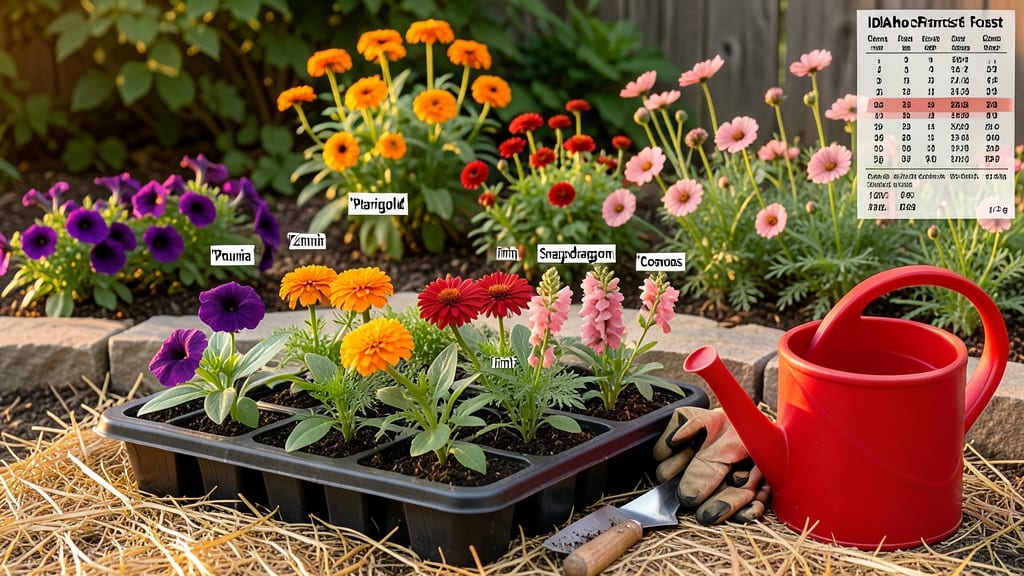
Timing your flowers 🌸 planting in Idaho isn't just about the calendar—it's about dodging those unpredictable late frosts that can turn your garden dreams into sad, wilted memories.
With USDA Zones 4-7 and microclimates ranging from Boise's dry heat to northern Idaho's chilly valleys, getting those bulbs and seeds in the ground at the right moment makes all the difference.
Let's cut through the guesswork: whether you're dreaming of vibrant annuals or hardy perennials, knowing the exact window to plant—typically April-May after the last frost or September for fall-bloomers—can mean the difference between a showstopping garden and a season of disappointment.
I'll walk you through the precise timing, zone-by-zone, so you can start planning now.
You'll discover how to adjust for Idaho's unique growing conditions, from protecting tender plants in Zone 5B to maximizing the growing season in Zone 7A.
Plus, I'll share insider tips on soil prep and frost protection that local nurseries swear by. Ready to transform your yard into a blooming paradise?
This isn't just about planting—it's about creating a timeline that works with Idaho's quirks. By the end, you'll know exactly when to dig in your flowers 🌸, which varieties thrive in your specific microclimate, and how to keep them looking their best all season long. Let's get started!
Idaho flower planting calendar by USDA Zone (5B-7A) for maximum blooms
Timing is everything when planting flowers in Idaho, where USDA Zones 5B-7A create wildly different growing conditions. In Zone 5B (northern Idaho), last frost dates can linger until May 15, while Zone 7A (southern Idaho) often sees frost-free soil by April 15.
These variations mean your planting schedule must adapt—whether you're in Boise or Coeur d'Alene.
For annual flowers, aim to plant after your area's last frost date.
In Zone 5B, this could mean waiting until late May, while Zone 7A gardeners may start as early as mid-April. Perennials and spring-blooming bulbs can often go in the ground earlier—sometimes as soon as soil is workable in early spring.
Let's break down the exact windows for each flower type.
🌱 PRO TIP: Use row covers or cold frames to extend your planting season by 2-4 weeks in colder zones.
Idaho Flower Planting Timeline by Zone
| Plant Type | Zone 5B (North) | Zone 6A (Central) | Zone 7A (South) |
|---|---|---|---|
| Spring-Blooming Bulbs | Late September - October | Mid-September - October | Early September - October |
| Annual Flowers | After May 15 | After May 1 | After April 15 |
| Perennial Flowers | Early April - May 15 | March 15 - April 30 | February 15 - April 15 |
| Fall Planting (Hardy Annuals) | August 1 - September 15 | July 15 - September 1 | July 1 - August 15 |
*Adjust dates 1-2 weeks earlier for high desert areas (e.g., Twin Falls) and later for mountainous regions (e.g., Sandpoint).
In Zone 5B, where late frosts are common, I recommend starting cool-season annuals like pansies and snapdragons indoors by March 1. This gives them a head start before transplanting outdoors after the last frost.
For heat-loving annuals such as zinnias and marigolds, wait until soil temperatures consistently stay above 55°F (13°C)—typically mid-to-late May in northern Idaho.
For perennials, early spring planting (March-April) gives roots time to establish before summer heat arrives. However, fall planting (September-October) is ideal for many perennials, allowing them to develop strong root systems before winter dormancy. Delphiniums and peony are classic examples that thrive with this approach.
Don't overlook fall planting for bulbs like tulips and daffodils. These need a period of cold to bloom properly, so plant them in September or October—about 6-8 weeks before the ground freezes.
In Zone 7A, this means getting them in the ground by early October, while Zone 5B gardeners should aim for late September.
If you're in a high desert area like Boise or Twin Falls, soil warms up faster than in mountainous regions. This means you can often plant 2-3 weeks earlier than the zone averages suggest.
Conversely, areas like McCall or Sandpoint may need to delay planting by 1-2 weeks due to later frost dates and cooler soils.
Always check your local Almanac frost dates or use a soil thermometer to confirm when your garden is ready.
For Zone 5B, I've had success using black plastic mulch to warm soil faster, allowing me to plant marigolds and calendulas** a full week earlier than the average frost date suggests.
Best flowers to plant in Idaho by season (with frost tolerance guide)
Idaho’s USDA Zones 5B-7A offer a surprising range of flower options, from frost-hardy perennials that survive winter to heat-loving annuals that thrive in Boise’s summer. The key is matching your planting window to each flower’s cold tolerance and bloom cycle.
For example, delphiniums (Zone 3-8) can handle Idaho’s early springs, while zinnias (Zone 3-10) need warmer soil to germinate.
Spring is the busiest season for Idaho gardeners, but don’t overlook fall-planted bulbs like daffodils, which naturalize beautifully in Zone 5B mountain gardens. Native wildflowers like lupine and blanket flower also require minimal care once established, making them perfect for low-maintenance landscapes.
Let’s break down the best seasonal flowers for your Idaho garden, complete with frost tolerance ratings.
🌸 Seasonal Flower Guide for Idaho Gardens
- 🌷 Tulips (Zone 3-8) – Plant bulbs in fall for spring blooms
- 🌼 Pansies (Zone 3-11) – Frost-tolerant; sow March-April
- 🌿 Lupine (Zone 3-9) – Native perennial; direct sow in spring
- 🌻 Zinnias (Zone 3-10) – heat-loving annual; sow after last frost
- 🌺 Sunflowers (Zone 2-11) – fast-growing; plant May-June
- 🌷 Delphiniums (Zone 3-8) – tall perennials; stake for support
- 🌼 Chrysanthemums (Zone 5-9) – late bloomers; plant August-September
- 🌱 Daffodils (Zone 3-8) – bulb plant for spring; September-October
- 🌿 Sedum (Zone 3-11) – drought-tolerant; plant early fall
Pro Tip: Use row covers for Zone 5B gardens to extend the season by 2-3 weeks 🌱
For Zone 5B gardeners in northern Idaho, prioritize cold-hardy perennials like coneflowers and black-eyed Susans, which bounce back after winter. In Zone 7A areas like Boise, you can experiment with tropical-looking cannas (Zone 7-10) as annuals, planting them after the May 15 average last frost date.
Native Idaho wildflowers are the lowest-maintenance choice, requiring minimal water once established. Blanket flower (Gaillardia) and lupine attract pollinators while thriving in poor, dry soil—ideal for high-desert gardens. If you’re new to gardening, start with self-seeding annuals like cosmos or marigolds, which reseed themselves year after year.
Always check your local frost dates—Boise’s last frost typically arrives 2-3 weeks earlier than McCall’s. Use frost cloth for tender plants like petunias if late frosts threaten. For container gardening, move pots to sheltered spots at night during spring/fall transitions.
Remember: Soil temperature matters more than air temperature. Use a soil thermometer to confirm when to plant warm-season flowers like zinnias—wait until soil reaches 60°F (15°C) for reliable germination. Happy planting! 🌿