
Plants
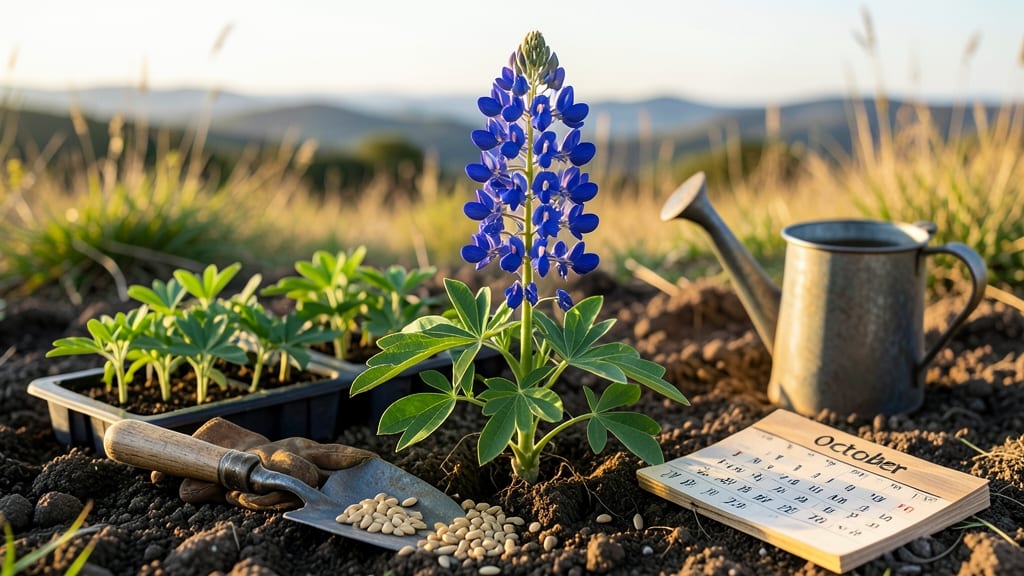
If you've ever driven through North Texas in spring and marveled at fields of vibrant bluebonnets 🌸, you know their beauty is worth the effort—but getting them to bloom reliably starts with timing your fall planting perfectly.
Plant too early, and summer heat will fry your seeds before they sprout. Too late, and winter frost will wipe them out before they take root.
The ideal window for planting bluebonnets in USDA zones 7b-8a is late September through early November, but local frost dates in your county can shift that range by 2-3 weeks.
Whether you're in Dallas or the Panhandle, understanding your specific frost risk zone is the key to avoiding wasted seed packets and brown patches where blooms should be.
What separates successful bluebonnet growers from those who scratch their heads in March wondering where their flowers disappeared? It's not just about the calendar—it's about soil temperature, seed depth, and watering cues that match North Texas' unpredictable weather.
I'll walk you through the exact steps to calculate your county's planting deadline, plus common mistakes that even experienced gardeners make.
By the end, you'll know exactly when to scatter those seeds for a carpet of blue in spring, plus how to adjust for drought years or early freezes. Let's turn your North Texas landscape into the envy of the neighborhood—starting with the right planting window.
North Texas bluebonnet planting deadlines by county (frost-zone map)
Bluebonnets thrive in North Texas when planted at the right time—late September to early November—but exact deadlines vary by county. The last frost date (typically December 15) and soil temperature thresholds (below 60°F) determine success.
Plant too early, and summer heat will kill seeds; too late, and frost arrives before germination.
North Texas spans USDA Zones 7b-8a, with Dallas-Fort Worth (Zone 8a) enjoying milder winters than the Panhandle (Zone 7b). This means 10-14 days difference in planting windows between regions. Use this guide to pinpoint your county’s ideal timeline and avoid frost-related failures.
For Dallas-Fort Worth, aim for late September to ensure seeds germinate before winter. In Lubbock or Amarillo, plant by early September—later plantings risk frost before sprouting. Use a soil thermometer to confirm temps are above 60°F before sowing.
Pro tip: Check your county’s NOAA frost data (like Dallas’ Dec 15 average) and adjust your window by 2 weeks if recent years showed earlier frost. Bluebonnets need 6–8 weeks to establish roots before winter dormancy.
If you’re in Zone 8a (Dallas), you can push planting to mid-November—just monitor forecasts for unusual cold snaps. In Zone 7b (Panhandle), August plantings are safer, as September heat can still stress seeds.
For urban gardeners, microclimates matter. Areas near concrete or pavement stay warmer—plant 1–2 weeks later than rural zones. Conversely, elevated areas (like hilltops) frost earlier; plant 2 weeks sooner.
Remember: Bluebonnets self-seed if left undisturbed. Once established, they’ll bloom annually with minimal effort—just get the timing right the first year. Miss the window, and you’ll wait another year for that iconic Texas blue carpet.
🌸
How to calculate your local bluebonnet planting window (step-by-step)
Timing your bluebonnet planting isn't just about the calendar—it's about understanding your local microclimate. North Texas spans USDA zones 7b-8a, but even neighboring counties can have 10-day differences in frost dates. Here's how to pinpoint your perfect planting window using science-backed methods.
Start by checking the NOAA frost probability maps for your county. For example, Dallas (zone 8a) has a 90% chance of frost by December 15, while Amarillo (zone 7b) hits that mark by November 15.
Planting 6-8 weeks before your first frost gives seeds time to germinate before winter dormancy.
Use Old Farmer's Almanac or your local Cooperative Extension office to find your average last frost date. For most of North Texas, this falls between December 1-15.
Bluebonnet seeds need soil temps between 60-70°F to germinate. Use a soil thermometer (under direct sun) for 3 consecutive days before planting. September 20-October 15 is typically ideal.
Old-school gardeners swear by planting during a waxing moon (when the moon is growing brighter). Check a moon phase calendar and aim for the first quarter (7 days after new moon) for best root development.
Subtract 8 weeks from your last frost date, then verify soil temps. Example: If your frost date is December 1, plant between October 10-25. For earlier planting (August-September), use a cloche or row cover to protect seedlings.
Talk to master gardeners in your area or check community garden forums. Note if nearby wild bluebonnet patches are already sprouting—this is nature's planting cue!
Pro tip: Use a seedling heat mat if planting in early September when soil temps may still be too warm. Bluebonnets need cool nights (below 75°F) to trigger germination, so avoid planting after October 31 unless you're in zone 8a+.
Remember, bluebonnets are winter annuals—they germinate in fall, grow through winter, and bloom in spring. The key is getting those seeds in the ground before soil temps drop below 50°F for more than 3 consecutive days.
If you miss the window, wait until early spring (February), but expect smaller blooms that year.
For maximum blooms, aim to have 50% of seeds germinate by November 1. This gives them enough time to establish roots before winter dormancy. Use a seedling emergence calculator (like the one from Gardeners.com) to track progress.