
Plants
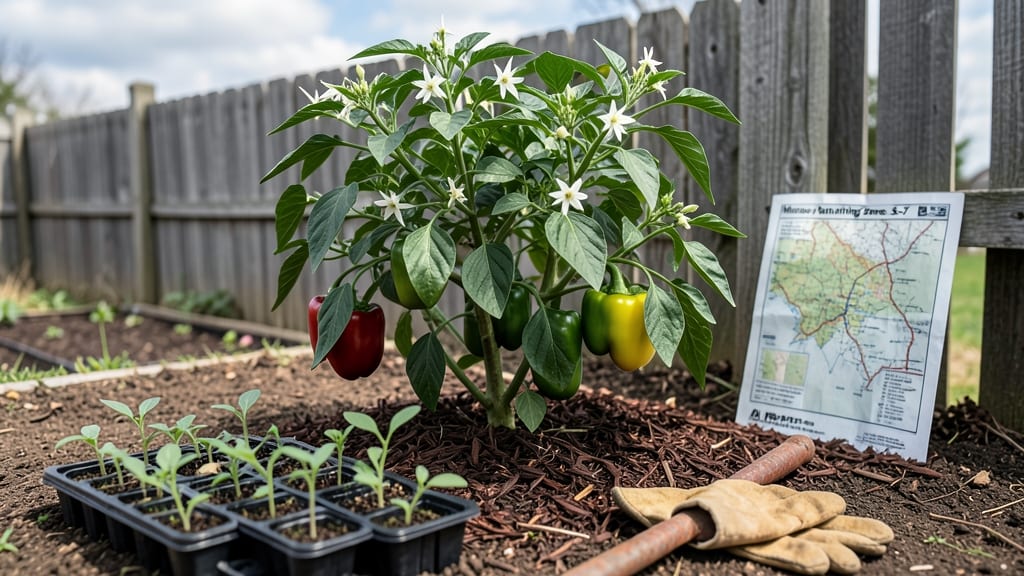
Timing your bell pepper 🌶️ planting in Missouri can mean the difference between a bountiful harvest and a frost-killed disappointment. That’s why knowing the exact window for your county—especially in zones 5b-6a—isn’t just helpful, it’s essential for success.
Missouri’s unpredictable spring weather makes this even trickier. Plant too early, and a late frost will wipe out your seedlings. Too late, and you’ll miss the 70-90 days these peppers need to mature before fall’s first chill.
The key? Starting seeds indoors by March 15 and transplanting after your last frost—typically between April 15 and May 15—depending on where you live in the state.
But here’s what most gardeners overlook: soil temperature matters just as much as air temperature. Your bell peppers won’t thrive until the ground reaches at least 60°F, which often lags behind frost-free dates. I’ll show you how to track this—and adjust your planting schedule—so you’re never left guessing.
Ready to avoid the common mistakes that waste time and money? Let’s break down the county-specific dates, the best varieties for Missouri’s short season, and pro tips to extend your harvest well into October. Your garden—and your taste buds—will thank you.
Missouri county-by-county bell pepper planting dates by frost zones
Missouri’s diverse climate means your bell pepper planting window varies dramatically from the Southeast’s warmer zones to the Northwest’s cooler regions.
The key is aligning your schedule with your county’s average last frost date, which typically ranges from April 15 in southern Missouri to May 15 in northern areas. For zero-frost success, wait until soil temperatures hit at least 60°F—a critical threshold for pepper germination and growth.
I’ve broken down planting dates by Missouri’s five major regions, including St. Louis, Kansas City, Columbia, Southeast, and Northwest, so you can pinpoint the ideal time to transplant seedlings or direct-sow seeds.
Pro tip: Use black plastic mulch to warm soil faster and extend your growing season by 2-3 weeks.
🌱
For St. Louis gardeners, aim to transplant seedlings between April 25 and May 10—this aligns with the city’s average last frost date of April 15. If you’re in Southeast Missouri, you can push things earlier, even as soon as April 15, thanks to warmer microclimates.
Meanwhile, Northwest Missouri gardeners should wait until late May to avoid frost damage.
🌡️
Missouri’s USDA zones 5b-6a mean you’ll need to start seeds indoors 8-10 weeks before your last frost date if you’re not using transplants. For example, St. Louis gardeners should begin seeds indoors around February 15, while Northwest Missouri should start in March.
Use grow lights to supplement natural light—pepper seedlings need 12-14 hours of light daily to avoid leggy growth.
💡
One of my biggest mistakes was planting bell peppers in early April in St. Louis—only to lose half my crop to a late frost in late April. Since then, I’ve relied on local weather data from the Midwest Regional Climate Center to fine-tune my schedule.
Their 5-year frost averages are a game-changer for Missouri gardeners. For instance, Kansas City’s last frost date has shifted 3 days earlier over the past decade due to climate trends.
✂️
If you’re direct-sowing seeds (which I recommend for Southeast Missouri), wait until soil temps are consistently above 60°F—use a soil thermometer to check. In cooler zones like Northwest Missouri, consider using biodegradable seed starter pots to harden off seedlings before transplanting.
This reduces transplant shock and gives your peppers a head start in the shorter growing season.
🌶️
For continuous harvests, plan a succession planting strategy: Start a second batch of seeds indoors 4-6 weeks after your first transplant. This ensures you’ll have peppers ripening from July through October, even in Missouri’s short 165-day growing season.
Pair this with disease-resistant varieties like ‘Aristotle’ or ‘Carolina Wonder’ to maximize your yield.
How to adjust planting dates for Missouri’s unpredictable weather patterns
Missouri’s weather is famously fickle—one week of sunshine can turn into a frost warning overnight. That’s why relying on average frost dates alone is risky for bell peppers. Instead, I fine-tune my planting schedule using 5-year frost data, soil temperature trends, and local forecasts.
This ensures my peppers get a head start without risking frost damage.
Start by checking your county’s last frost date from the Missouri State Climate Center. For most of the state, this falls between April 15 and May 1, but northern counties like Adair or Grundy can wait until May 15.
The secret? Planting 2-3 weeks before the average last frost—just use row covers for extra protection.
🌡️ Key Adjustments for Missouri’s Weather
- 1. Monitor soil temps: Use a soil thermometer—peppers need 60°F+ soil to thrive. Wait until mid-May in cooler zones if needed.
- 2. Start seeds indoors: Begin 8-10 weeks before transplanting (by March 15) for a jumpstart.
- 3. Use black plastic mulch: Warms soil 5-10°F faster than bare earth, speeding up growth.
- 4. Extend the season: Add row covers in early spring or cold frames in fall for 4-6 extra weeks of harvest.
- 5. Track forecasts: Delay planting if below-32°F temps are predicted within 2 weeks.
For northern Missouri (zones 5b-6a), I often plant two batches: one in late April under row covers and another in early May for insurance. This succession planting strategy guarantees at least one healthy harvest, even if Mother Nature throws a curveball.
Don’t forget about soil temperature. A cold snap can delay germination even after the last frost. I test soil temps daily in April—if they’re below 60°F for 3+ days, I hold off. Black plastic mulch is my go-to fix; it raises soil temps by 10°F+ and suppresses weeds.
Missouri’s humidity and summer heat also play a role. Once peppers are planted, I switch to drip irrigation to avoid fungal diseases like blight, which thrives in wet foliage. Watering in the early morning (before 10 AM) keeps plants dry and healthy.
Finally, keep an eye on the fall forecast. If early frosts are predicted by September 15, I prioritize heat-tolerant varieties like ‘Aristotle’ or ‘Jupiter’ and use row covers to stretch the season until October 15. With these adjustments, I’ve harvested peppers well into November—even in Missouri!