
Companion Plants
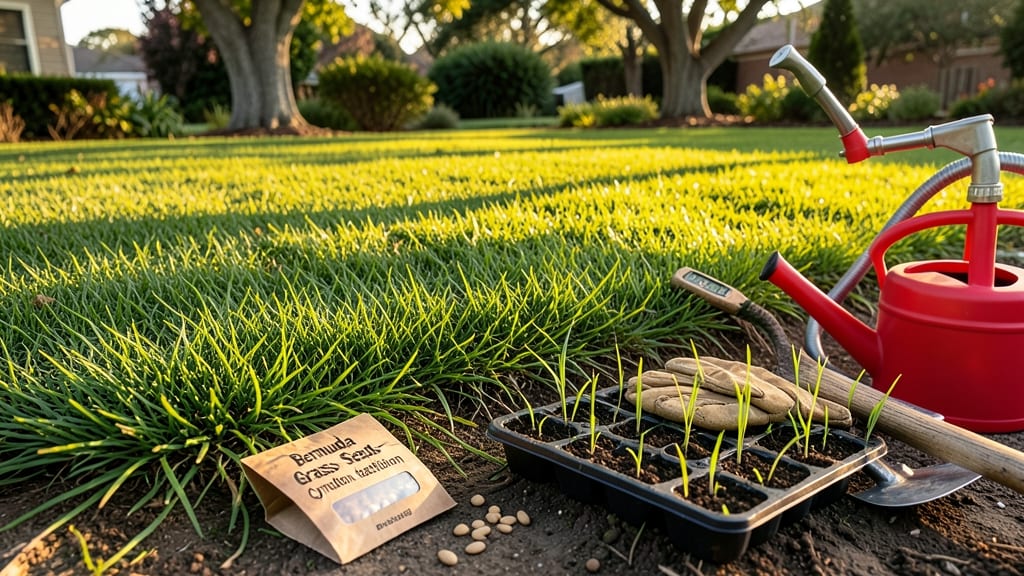
Planting Bermuda grass seed in Texas isn't just about timing—it's about beating the heat before it beats your lawn. If you plant too early, your seeds might rot in cool soil; too late, and weeds will steal your turf's spotlight.
The difference between a fast, lush lawn and a patchy disappointment often comes down to knowing the perfect window for your region.
Texas' 8a-10b zones stretch from North to South, each with its own frost-free rhythm. While North Texas might wait until mid-April for soil to warm, South Texas can start as early as March—but only if you're ready to fight off spring rains.
The key? Waiting until soil temps hit 65°F consistently, when your seeds will germinate in 5-14 days instead of struggling.
You’ll also need to account for Texas’ infamous droughts and sudden downpours. Overwatering early on can drown seeds, while skipping irrigation in a dry spell will leave them high and dry.
This guide breaks down the best months to plant by region, plus how to prep your soil and water like a pro—so your 🌱 Bermuda grass takes off fast and stays resilient through summer's worst.
Ready to skip the guesswork? Let’s dive into the exact dates and steps that’ll give you a thick, green lawn before the heatwave hits—and keep it thriving all season long.
Best planting windows for Bermuda grass seed in Texas by region
Texas’ diverse climate zones mean your Bermuda grass seed planting window depends heavily on where you live.
In North Texas, cooler springs delay ideal planting until late May, while South Texas can start as early as mid-April. Central Texas falls in between, with early May being the sweet spot. West Texas, with its extreme heat, often waits until June to avoid seed desiccation.
For all regions, the golden rule is to plant when soil temperatures hit at least 65°F—this ensures strong germination. Hybrid Bermuda grass seeds, which are more heat-tolerant, can handle slightly warmer soil, but common Bermuda grass needs that 65°F minimum to thrive. Heat zones 8a-10b across Texas all align with this rule, but timing shifts based on local frost dates and rainfall patterns.
Here’s how to pinpoint your exact planting window using region-specific soil temperature trends and historical frost data:
If you’re in a transition zone (e.g., between North and Central Texas), err on the side of planting later. Bermuda grass seed won’t germinate below 65°F, and cooler soil temperatures can lead to fungal diseases like Pythium. Hybrid varieties like ‘Tifway’ or ‘Celebration’ are more forgiving for early starts, but even they struggle if soil stays below 60°F for more than a week.
Pro tip: Use a soil thermometer (available for ~$10) to confirm temperatures before planting. Stick it 2 inches deep—that’s where your seeds will be. Morning readings (between 8-10 AM) are most accurate for daily trends.
If your soil hits 65°F but stays there for only a few days, wait for a consistent 10-day stretch above that threshold.
Rainfall also plays a role. In dry years (like West Texas), you might need to supplement with irrigation to keep seeds moist until germination.
In wet springs (common in East Texas), delay planting until the ground isn’t saturated—Bermuda grass seed rots if it sits in waterlogged soil for more than 48 hours.
For fastest establishment, aim to plant 4-6 weeks before your area’s first major heatwave. This gives seedlings time to develop roots before 100°F+ temperatures stress them.
In South Texas, that might mean planting in April; in North Texas, June is safer. Adjust based on your local weather forecast—not just averages.
One last tip: If you miss the ideal window, don’t panic. Bermuda grass seed can be planted as late as early August in most of Texas, but growth will slow dramatically as days shorten.
For a fall lawn, focus on overseeding with ryegrass instead—it handles cooler temps better and bridges the gap until spring.
Ready to plant? Grab your seed, soil thermometer, and sprinkler—your drought-resistant lawn starts with the right timing! 🌱
Key factors that determine your ideal planting date in Texas
Texas’ diverse climate zones mean your ideal Bermuda grass planting date depends on more than just the calendar—soil temperature, rainfall patterns, and even seed type play critical roles. For example, North Texas (like Dallas) has cooler springs, while South Texas (like Houston) can hit 90°F soil temps by April.
Ignoring these factors can lead to slow germination or weed takeover.
Your soil temperature is the #1 predictor of success. Bermuda grass seeds need 65°F+ soil temps to sprout reliably. In Central Texas, this typically happens by mid-April, but in West Texas, you might wait until late May.
Use a soil thermometer—don’t guess! Planting too early in cool soils wastes seed and invites fungal diseases.
| Factor | Texas-Specific Requirement | Why It Matters |
|---|---|---|
| Soil Temp | 65°F+ (use thermometer) | Cooler soils = slow germination or rot |
| Rainfall | 0.5–1 inch/week (supplement if dry) | Drought stress stalls seedling growth |
| Seed Type | Hybrid (faster) vs. Common (slower) | Hybrids need earlier planting |
| Region | North TX: April–May | South TX: March–April | Heat zones shift planting windows |
Don’t overlook rainfall patterns—Texas summers bring drought conditions, and Bermuda grass seedlings need consistent moisture to establish roots. If your area forecasts less than 0.5 inches of rain weekly, plan for drip irrigation or soaker hoses. Pro tip: Water early morning to reduce evaporation and fungal risks.
Choosing the right Bermuda grass seed type also affects timing. Hybrid varieties (like Tifway or Celebration) germinate faster but need earlier planting (as soon as soil hits 65°F). Common Bermuda is slower but tolerates later starts. Check the seed packet for days-to-germination—this tells you how quickly to expect sprouts.
Adjust for early/late starts with these rules: If you plant 2+ weeks early (soil <65°F), cover seeds with lightweight row covers to retain heat. For late starts, use starter fertilizer to compensate for slower growth. In South Texas, where summers arrive early, aim for March planting to beat the heat.
Finally, watch for weed competition—Bermuda grass seedlings move slowly at first. If you plant in May or June, pre-treat the soil with corn gluten meal (a natural pre-emergent) to suppress weeds until your grass gets established.
Timing isn’t just about the calendar; it’s about giving your grass the competitive edge it needs to thrive in Texas’ tough conditions. 🌱