
Plants
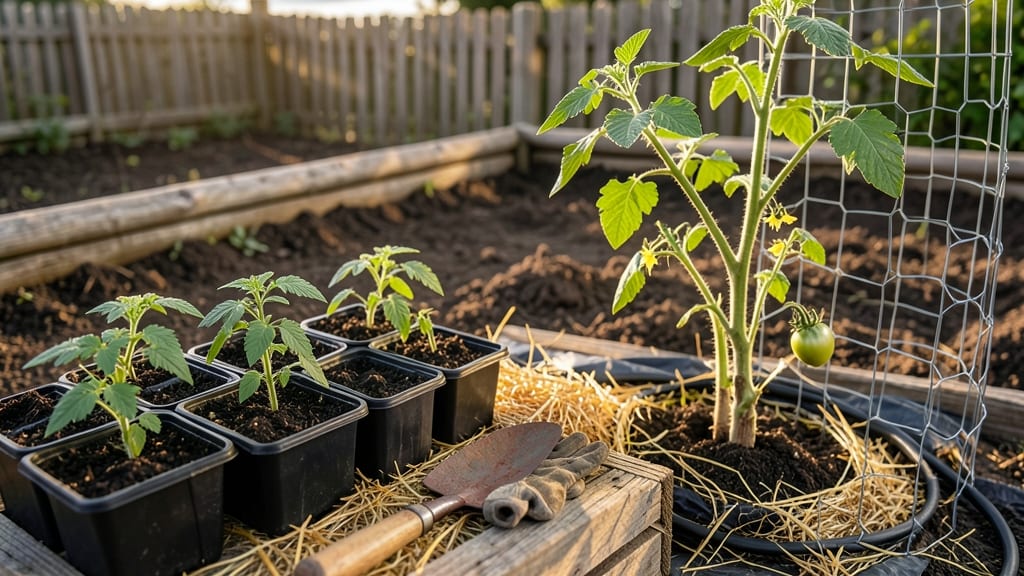
When is the best time to plant tomatoes in North Carolina isn't just about the calendar—it's about beating the last frost while ensuring your soil is warm enough for those 🍅 seedlings to thrive.
Get it wrong, and you might end up with leggy plants or a harvest that never comes. The key lies in understanding your county's unique frost-free window and soil temperature thresholds, which can vary dramatically from the mountains to the coast.
I've spent years growing tomatoes across USDA Zones 7a-8b, and what I've learned is that waiting until soil reaches 60°F and nighttime temps stay above 50°F makes all the difference.
For most of North Carolina, that means planting between April 15 and May 15, but coastal areas and higher elevations often need adjustments. Let me show you exactly how to time it right for your specific location.
Beyond just the dates, you'll discover region-specific strategies that work—like using black plastic mulch to warm soil faster in the mountains or choosing heat-tolerant varieties for the Piedmont's intense summers. These little tweaks can mean the difference between a bountiful harvest and a season of disappointment.
Ready to maximize your tomato yield? I'll walk you through the exact frost-free timelines, soil prep tips, and planting windows tailored to North Carolina's diverse climate zones. Let's get those tomatoes in the ground at the perfect moment—so you can enjoy homegrown 🍅 all season long.
North Carolina’s tomato planting timeline by county: frost-free dates & soil temperature rules
North Carolina’s tomato planting window isn’t one-size-fits-all—it spans from late March in the Coastal Plain to early May in the mountains. The key factors are soil temperature (60°F+) and frost-free dates, which vary by USDA Zone (7a-8b).
Planting too early risks cold damage, while waiting too long shortens your harvest season.
For Coastal counties like Craven or Beaufort, the last frost typically arrives by March 15, giving you an early start. In contrast, mountain regions like Haywood or Mitchell often wait until May 1 due to lingering cold snaps.
Always verify your local frost dates using the NC State Extension Plant Tool for precision.
Soil temperature is non-negotiable—tomatoes won’t germinate below 55°F and thrive best in 60°F+ soil. Use a soil thermometer (or press your hand into the soil; if it feels cool, wait). Black plastic mulch can warm soil by 10-15°F, accelerating planting in cooler zones like the Piedmont.
Here’s your county-by-county planting timeline, including ideal transplant dates and harvest windows for heirloom, cherry, and beefsteak varieties:
For early-season planting, opt for fast-maturing varieties like 'Early Girl' (50–55 days) or 'Stupice' (48 days). Heirlooms like 'Brandywine' (75–85 days) need the full 120–140 frost-free days common in the Coastal Plain but may struggle in the mountains.
Pro tip: If your soil is slow to warm (common in clay-heavy Piedmont soils), amend with compost or aged manure 2–3 weeks before planting. This boosts microbial activity, which generates heat. Pair this with black plastic mulch for a 10–15°F soil temperature lift.
Never plant directly into cold soil—even transplants suffer if roots can’t establish. Harden off seedlings for 7–10 days before transplanting, and water deeply at dusk to reduce transplant shock. In humid coastal areas, stake or cage plants early to prevent blossom-end rot from uneven moisture.
For extended harvests, try succession planting: Sow new seeds every 2 weeks until June 1 in the Coastal Plain or July 1 in the Piedmont. This ensures a continuous supply of ripe tomatoes from July through October.
🌱
How to adjust tomato planting for North Carolina’s microclimates: Coastal vs. Piedmont vs. mountains
North Carolina’s three distinct regions—Coastal Plain, Piedmont, and Mountains—each demand unique tomato planting strategies. Humidity levels, altitude, and heat intensity create microclimates that can shift your ideal planting window by weeks or even months.
Let’s break down how to adapt your approach for each region to avoid common pitfalls like blossom end rot or stunted growth.
In the Coastal Plain, where humidity lingers and summers stretch long, tomatoes thrive with earlier starts (as early as March 15) but require vigilance against fungal diseases. Meanwhile, the Piedmont’s hot, dry summers demand heat-tolerant varieties and mulching to retain moisture.
Up in the Mountains, cooler temperatures push planting dates later, but the shorter growing season rewards gardeners with sweeter, smaller tomatoes when timed correctly.
🌱
| Region | Key Climate Factor | Planting Window | Best Varieties | Critical Adjustment |
|---|---|---|---|---|
| Coastal Plain | High humidity, longer growing season | March 15–April 15 | 'Celebrity', 'Solar Fire' | Use black plastic mulch to prevent soil-borne diseases |
| Piedmont | Hot summers, well-drained soil | April 1–May 1 | 'Beefsteak', 'Better Boy' | Stake plants early to prevent sunscald from intense heat |
| Mountains | Cooler nights, shorter season | May 1–June 1 | 'Mountain Merit', 'Stupice' | Start seeds indoors by March 1 for transplanting |
For Coastal Plain gardeners, the key is soil warmth. Test soil temperature with a thermometer—it should hit 60°F+ before planting. Use black plastic mulch to raise soil temps faster and deter fungal pathogens like early blight, which thrives in the region’s damp air.
Varieties like 'Solar Fire' (heat-tolerant) or 'Celebrity' (disease-resistant) are top picks.
In the Piedmont, where temperatures can soar above 90°F, focus on shade cloth or drip irrigation to keep plants cool.
Avoid planting too early—wait until nighttime temps stay above 55°F to prevent blossom drop. Indeterminate varieties like 'Better Boy' perform well here, as they produce fruit over a longer season.
Mountain gardeners face the shortest growing season, so succession planting is essential. Start seeds indoors by March 1 and transplant after the last frost (typically May 1). Choose early-maturing varieties like 'Mountain Merit' (60 days to harvest) or 'Stupice' (a cold-hardy Czech heirloom).
Elevation also affects frost dates—counties like Haywood or Watauga may see frost as late as June 1 in high valleys.
🌿