
Plants
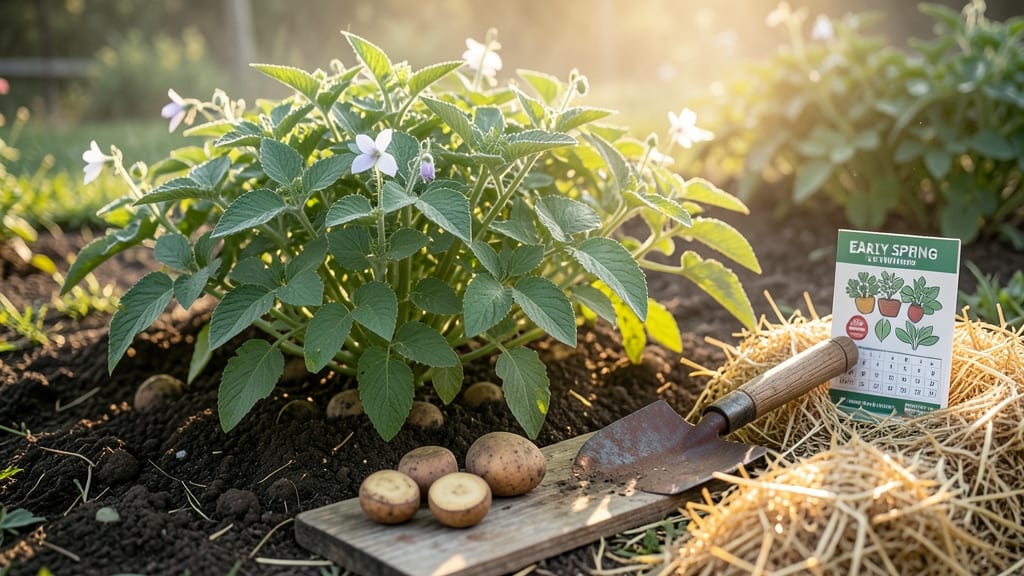
Timing when do you plant potatoes in Oregon isn’t just about following a calendar—it’s about beating the unpredictable frost that can turn your hard work into a soggy mess.
With USDA zones spanning 7b to 9a, your neighbors might be digging in while you’re still waiting for soil to warm, or vice versa.
Most gardeners in the Willamette Valley or coastal areas can start as early as mid-March, but those in the High Desert or inland regions should wait until April to avoid frost damage.
The key? Planting 4-6 weeks before your last frost date—usually around March 15—when soil hits 45°F.
Whether you’re growing early varieties like Yukon Gold or late-season Kennebecs, getting this right means the difference between a bountiful harvest and a disappointing yield.
I’ll walk you through Oregon’s exact planting windows, soil prep secrets, and how to adjust for your microclimate—so you can finally stop guessing and start growing.
Ready to turn your garden into a potato powerhouse? Let’s dive into the perfect timing and techniques that work for Oregon’s diverse growing conditions.
Oregon’s exact potato planting timeline by region (with last frost dates)
Timing your potato planting in Oregon isn’t one-size-fits-all—coastal areas, the Willamette Valley, and high desert regions all have different frost timelines that can shift your planting window by weeks.
For example, coastal Oregon (like Astoria) often sees its last frost by March 1, while Bend in Central Oregon might not hit that mark until April 15. Understanding these regional differences is key to avoiding frost damage or missed harvests.
To pinpoint your exact planting window, start by finding your local last frost date using the USDA Plant Hardiness Zone Map. Most of Oregon falls in Zones 7b-9a, but elevation plays a huge role—mountainous areas (like the Cascade foothills) can be 2-3 weeks later than valley floors.
For instance, Portland’s last frost typically lands around March 20, while La Grande in Eastern Oregon might not see its last frost until April 10.
Here’s the golden rule: Plant seed potatoes 4-6 weeks before your last frost date, but only when soil temperatures hit 45°F (7°C). This ensures tubers sprout without risking cold soil shock, which can stunt growth.
For early varieties (like Yukon Gold), aim for mid-March to early April. For late varieties (like Kennebec), wait until April to early May to give them enough time to mature before summer’s heat sets in.
🌱
If you’re unsure about your exact last frost date, check local weather stations or use the Old Farmer’s Almanac for historical data.
For microclimate adjustments, note that low-lying areas (like river valleys) often frost later than hillsides, while urban heat islands (like downtown Portland) can push frost dates back by 3-5 days. To account for these variations, plant a few test rows 2 weeks apart to hedge your bets.
For gardeners in Zone 9a (like Southern Oregon’s Rogue Valley), you can even squeeze in a fall planting—late July to early August—for a second harvest.
These potatoes will mature just in time for winter storage, but they require extra care to avoid heat stress or disease in Oregon’s humid summers.
Pro tip: Pre-warm your soil by covering beds with black plastic for 1-2 weeks before planting. This trick helps cooler regions (like the Coast Range) reach the 45°F threshold faster, giving your potatoes a head start. Just remove the plastic 24 hours before planting to avoid shocking the tubers.
🌿
One common mistake Oregon gardeners make is planting too early and ending up with frost-nipped sprouts. To avoid this, monitor soil temperatures with a soil thermometer—if it’s below 45°F, wait.
Another pitfall is overestimating your growing season. In high-elevation areas, even late varieties like Russet Burbank may not fully mature, so stick to early or mid-season types for reliable yields.
For a staggered harvest, plant one-third of your crop every 2 weeks starting in mid-March. This ensures you’ll have potatoes ready from June through August, regardless of Oregon’s unpredictable weather.
And remember: the earlier you plant, the earlier you harvest—but only if the soil is warm enough to support growth.
☀️
Best cold-hardy potato varieties for Oregon’s short growing season
Oregon’s cool climate and short growing season demand potato varieties that mature quickly and tolerate chilly temperatures. I’ve grown Yukon Gold and Red LaSoda for years—they’re my top picks for their reliability in USDA Zones 7b-9a.
Early varieties like Kennebec or Fingerlings also thrive, especially if you’re aiming for a staggered harvest to extend your season.
For coastal Oregon, where frost lingers later, prioritize early-maturing varieties (60-90 days). Inland areas with warmer days can handle mid-to-late season types (90-120 days), like Russet Burbank, but they need protection from early frosts.
Always check seed packets for days to maturity—this tells you exactly when to plant for your harvest window.
Pro Tip: Plant certified disease-free seed potatoes to avoid late blight, a common Oregon issue. I order mine from local nurseries like Territorial Seed Company or Johnny’s Selected Seeds—they ship varieties tested for our climate.
🥔 Variety Showdown: Oregon’s Top Potatoes
If you’re new to growing potatoes, start with one early variety (like Kennebec) and one mid-season type (like Yukon Goldtwo-phase harvest. Plant the early variety first, then the mid-season type 2-3 weeks later.
This ensures you have potatoes ready by June and a second batch by August, just as Oregon’s summer heat ramps up.
For high-altitude areas (like Bend or La Pine), opt for late-maturing varieties with thicker skins, like Russet Norkotah. These handle cooler nights better and resist cracking. Always adjust your planting timeline by 2-3 weeks later than coastal zones—frost can linger until May 15 at higher elevations.
Remember: Soil temperature matters more than air temperature. Use a soil thermometer to confirm your soil is at least 45°F (7°C) before planting. If it’s colder, wait—cold soil delays germination, and you’ll waste precious growing days.