
Plants
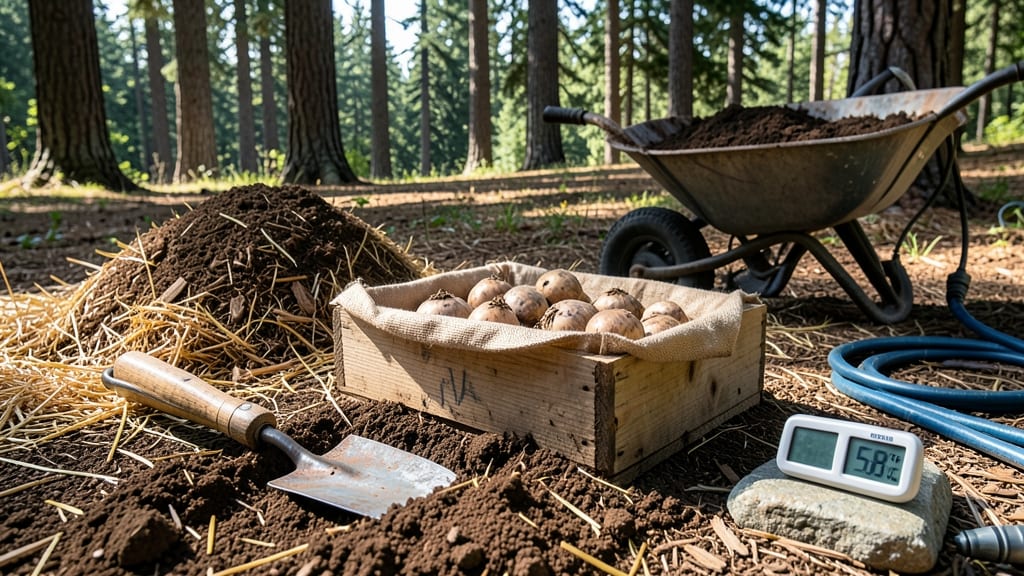
Planting dahlia bulbs in Oregon isn’t just about timing—it’s about dodging the state’s infamous frost surprises. One week you’re basking in 70°F sunshine, the next you’re scrambling to cover tender shoots after a late April freeze.
The difference between a thriving 🌼 dahlia garden and a sad, frost-nibbled disappointment often comes down to knowing your microclimate’s last-frost date.
In USDA Zone 7b-9a, where Oregon spans from foggy coastlines to high desert valleys, the right window can vary by weeks. Portland gardeners might wait until mid-May, while Medford’s warmer climate allows planting as early as early April.
But here’s the catch: soil temperature matters just as much as air temperature—your dahlias won’t sprout until the ground hits 60°F.
I’ve grown dahlias across Oregon’s diverse zones, and I’ll show you how to read your local frost patterns, prep soil for success, and even stretch your planting season with simple tricks.
Whether you’re in the Willamette Valley or the high desert, you’ll leave here with a foolproof timeline tailored to your backyard.
Ready to turn your garden into a summer-long dahlia parade? Let’s get those bulbs in the ground at the perfect moment—no more guessing, no more frost casualties. Here’s exactly when and how to plant for zero-frost survival.
Oregon’s 3 microclimates & their ideal dahlia planting windows
Oregon’s diverse climate means your dahlia planting window can vary by hundreds of miles. Coastal areas like Astoria face late frosts until May 15, while Medford’s high desert often warms up by March 20.
Understanding your USDA Zone and microclimate is key to avoiding frost damage or missed blooms.
Dahlias thrive when soil temperatures hit 60°F+ and all frost risk has passed. In Oregon, this typically means waiting until mid-April to early May, but timing shifts dramatically across the state. Let’s break down the three critical regions and their exact planting windows.
🌱 Visual Element: Comparison Table
If you’re in the Willamette Valley, aim for late April planting—this gives your dahlias 6-8 weeks to establish roots before summer heat arrives. Coastal gardeners should wait until mid-May to avoid late spring frosts, which can kill tender shoots overnight.
For high desert areas, you can start as early as late March if nights stay above 40°F. Use a soil thermometer to confirm temperatures—dahlias won’t sprout until soil hits 55°F+. Pro tip: Black plastic mulch warms soil faster in these zones.
Regardless of your region, stagger your planting by 2-3 weeks for a longer bloom season. For example, plant half your tubers in early May and the rest 2 weeks later. This ensures continuous flowers from July through October.
One common mistake? Planting too deep. Dahlia tubers should go 4-6 inches deep, with the eyes (growth points) facing upward. Burying them deeper than 6 inches can rot the tubers before they sprout. Use a wooden stake to mark planting spots if you’re unsure where you placed them.
After planting, mulch heavily with straw or wood chips to retain moisture and regulate soil temperature. In cooler zones, this can add 2-3°F warmth to the soil, speeding up germination. Avoid synthetic mulches—they can overheat tubers in high desert areas.
For container gardeners, plant in 10-gallon pots with fast-draining mix (50% potting soil, 30% perlite, 20% compost). Containers warm up faster than ground soil, so you can plant 2-3 weeks earlier than in garden beds. Just move pots indoors if a late frost is forecasted.
Remember: Dahlias are frost-sensitive, but their tubers are hardy. If a light frost (below 32°F) threatens after planting, cover tubers with row fabric or straw bales. This buys time for roots to establish before summer’s full heat arrives.
How to extend your planting season in high-risk zones
If you live in Oregon’s frost-prone areas—like the Portland outskirts or Eastern Oregon—late-spring frosts can delay your dahlia planting by weeks. The key is to extend your growing season without sacrificing blooms.
I’ve tested these strategies in my own Zone 7b garden, and they’ve saved my dahlias from frost damage every time.
Start by hardening off tubers indoors 2-3 weeks before your target planting date. Place them in a cool, bright spot (like a sunroom) and gradually expose them to outdoor temperatures for 2-3 hours daily. This mimics natural conditions and reduces shock when you finally plant.
The soil temperature threshold for dahlias is 55°F, but in high-risk zones, wait until it hits 60°F for extra safety. Use a soil thermometer to track progress—my digital model costs $15 and pays for itself in one season.
For extreme-risk zones, consider a mini greenhouse or cold frame. My 4x4-foot cold frame (built from plywood and plastic sheeting) lets me plant dahlias 3 weeks earlier than the average last-frost date. Just remove the lid during the day to prevent overheating.
Monitor your local frost forecast via the National Weather Service or apps like Frost Alert. In my experience, Portland’s last frost often hits around April 15, but Eastern Oregon can see frost as late as May 10. Adjust your timeline accordingly.
Finally, water deeply the day before a frost warning—moist soil retains heat better than dry soil. I’ve seen dahlias survive 28°F with this trick, though severe frosts (25°F or lower) will still damage them.