
Plants
Timing your asparagus planting in Utah isn't just about the calendar—it's about understanding your microclimate's quirks. Whether you're in the high desert or mountain valleys, getting those crowns in the ground at the right moment means the difference between a bountiful harvest and wasted effort.
With Utah's USDA zones 5b-7b and unpredictable weather, knowing when to plant asparagus can feel like solving a puzzle. The key is waiting for soil temperatures to stabilize, typically between 50-60°F, which usually lands in early spring—March to April.
But don't rush; planting too early risks frost damage, while waiting too long can stunt growth.
I've seen gardeners in Salt Lake City swear by mid-March plantings, while those in St. George often wait until late April. The secret? Monitoring local frost dates and soil conditions. A well-timed planting sets the stage for strong crowns and a harvest ready in just two to three years.
Ready to avoid common mistakes and maximize your asparagus yield? Let's break down the exact planting windows for your Utah microclimate, plus soil prep tips and weather adjustments to ensure success.
Utah’s best asparagus planting zones and exact dates by microclimate
Utah’s diverse microclimates create unique challenges for asparagus growers. From the high desert of Salt Lake City to the mountain valleys of Park City and the warmer southern regions like St. George, planting times vary dramatically.
To succeed, focus on soil temperature (ideal: 50-60°F) and last frost dates, which shift by elevation. Let’s break down the exact windows for each zone.
Asparagus crowns thrive when planted in early spring, but Utah’s USDA zones 5b-7b demand precision. High-altitude areas (like Logan) need earlier planting, while southern Utah (like Cedar City) can wait slightly longer. Always check your local frost dates—a late frost can kill young shoots if planted too early.
Here’s how to align your planting with Utah’s three key microclimates:
For high-elevation areas (above 7,000 ft), like Park City, aim for March 15-April 15 to avoid late snowmelt or frost. In contrast, St. George’s warmer climate allows planting as early as late February, giving crowns a head start before summer heat arrives.
Use a soil thermometer to confirm readiness—plant only when soil reaches 50°F+. Cold soil delays root establishment, leading to weak plants. If temperatures fluctuate, opt for container planting to control soil warmth.
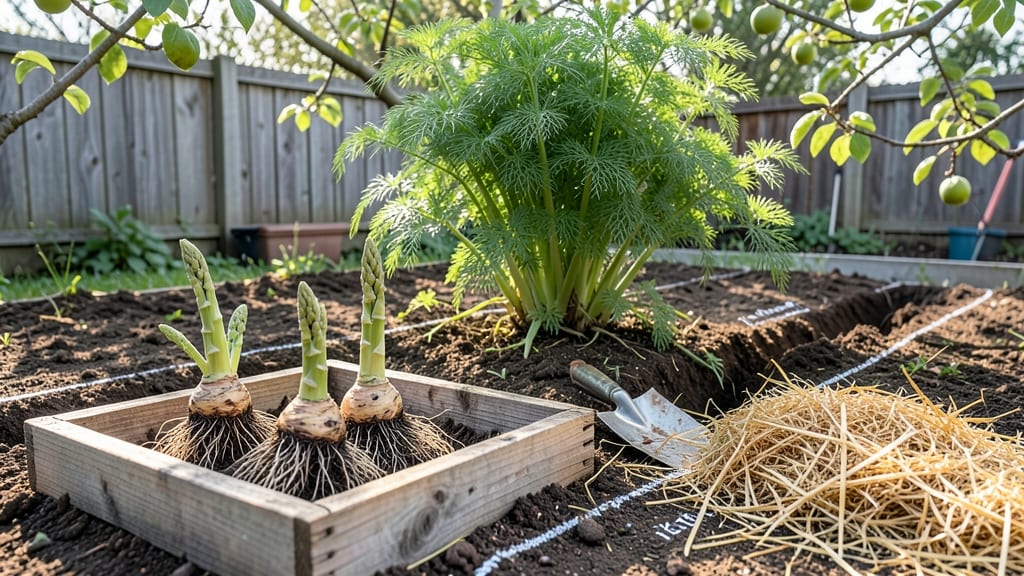
Pro tip: In northern Utah, cover crowns with straw mulch (3-4 inches) after planting to insulate roots from late frosts. This buys you 2-3 extra weeks of growing time before summer’s full sun peaks.
Southern Utah gardeners should avoid planting after April 15, as the intense summer sun can stress young crowns. Instead, focus on early spring and prioritize deep watering to combat desert heat.
Remember, asparagus is a perennial investment—planting at the right time ensures harvests for 15+ years. In Utah, patience and precision pay off with juicy, homegrown spears by late spring.
🌱
How to adjust planting timing for Utah’s unpredictable weather patterns
Utah’s weather can shift dramatically from one week to the next, especially in high-altitude areas like Park City or hot desert regions like St. George. If you plant asparagus crowns too early, a late frost can kill young shoots.
Plant too late, and your crowns won’t establish roots before summer heat arrives. The key is flexibility—adjusting your timeline based on soil temperature and local forecasts.
For most of Utah, the ideal planting window is when soil temperatures reach 50°F (10°C) at a 6-inch depth. Use a soil thermometer to check—this is your green light to plant.
In southern Utah (USDA Zone 7b), this often happens by mid-March, while northern Utah (Zone 5b-6a) may need to wait until late April.
🌱 Pro Tip: If your soil is still too cold, try these tricks to warm it faster:
- Cover beds with black plastic mulch 1-2 weeks before planting.
- Use a cold frame or mini greenhouse to protect young crowns.
- Plant in raised beds, which warm up quicker than in-ground soil.
⚠️ Warning: Late Snowmelt Risks
In mountain valleys or high-desert areas, late snowmelt can delay planting by weeks. If you’re unsure whether to plant in March or April, err on the side of waiting. Asparagus crowns planted in cold, wet soil rot quickly—this is the #1 reason Utah gardeners fail with asparagus.
Another Utah-specific challenge is temperature swings. If a hard freeze (below 20°F (-7°C)) is forecast after planting, protect your crowns with straw mulch or burlap sacks. In Zone 6a and below, consider planting in containers so you can move them to a sheltered spot if needed.
For high-altitude gardeners (e.g., Logan, Ogden), have a backup planting date in early May. If your first attempt fails due to frost, you can replant crowns as late as mid-May, though yields may be smaller the first year. The trade-off? Better survival rates than risking a late-March planting.
Finally, monitor your local almanac for last frost dates. While the average last frost in Salt Lake City is April 15th, microclimates can vary by 1-2 weeks. Planting asparagus 2-3 weeks before the average last frost gives your crowns time to root before summer heat arrives.
With these adjustments, you’ll beat Utah’s unpredictable weather and give your asparagus the best shot at a bountiful harvest in just 2-3 years. The extra effort now pays off with decades of spears—asparagus crowns can produce for 15-20 years if cared for properly! 🌿