
Plants
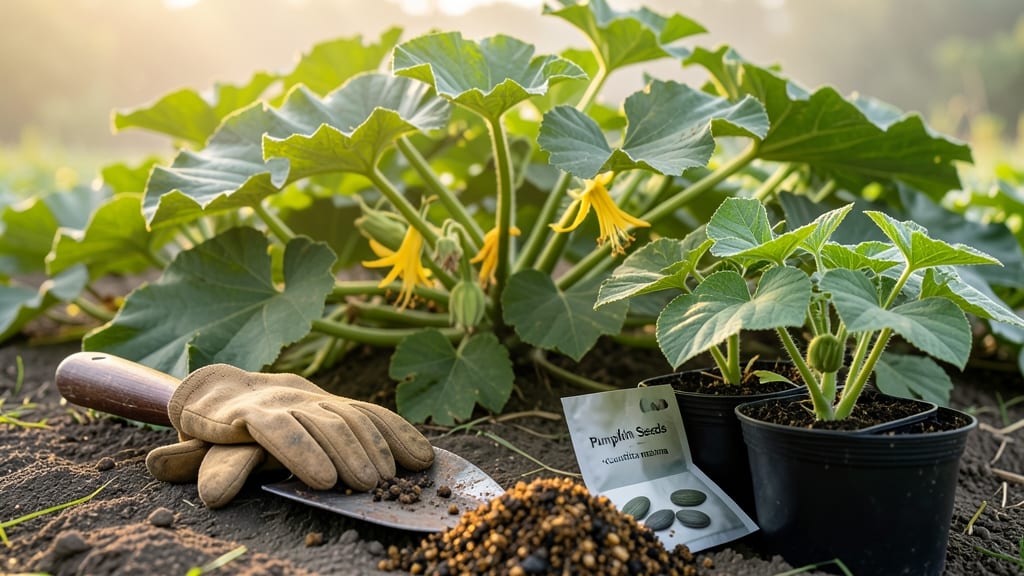
Timing your pumpkin planting in Illinois can make or break your harvest—get it right, and you'll enjoy 🎃 from September through Thanksgiving. The key window is between late April and mid-June, but that's just the starting point for Illinois gardeners in zones 5-6.
Most gardeners wait until after the last frost (typically around April 15), but soil temperature matters just as much—pumpkin seeds need that soil to warm up to 60°F before they'll sprout reliably.
That means even if frost has passed, you might need to wait another week or two in cooler northern counties.
What you'll discover here are the exact county-specific planting dates that work best for Illinois' varied climate zones, from Chicago's urban heat islands to rural areas where nights stay chilly longer.
We'll also cover which pumpkin varieties thrive in the Midwest and how to adjust your planting schedule if you're dealing with microclimates or unpredictable weather patterns.
Whether you're growing pumpkins for carving, baking, or just the joy of watching them grow, getting the timing right means bigger yields and happier harvests. Let's get your Illinois pumpkin garden off to the perfect start.
Best pumpkin planting dates by Illinois climate zones
Illinois spans USDA hardiness zones 5-6, but planting pumpkins isn't one-size-fits-all. The state's climate divides into five distinct zones—Northern, Northwest, Central, Southwest, and Southern—each with unique frost patterns and soil warming speeds.
For example, Chicago (Cook County) averages its last frost on April 25, while Carbondale (Jackson County) typically warms up two weeks earlier. These differences mean your planting window could shift by 3-4 weeks depending on location.
Pumpkins thrive when soil temperatures hit 60°F or above—a threshold that arrives 2-3 weeks later in northern Illinois compared to southern counties. Using a soil thermometer (just $10 at garden centers) is your best friend here.
Planting too soon in cool soil leads to rotted seeds or stunted vines, while waiting too long risks overcrowded harvests if you miss the ideal window.
Here's the golden rule: Count backward from your first frost date (usually October 15 in most of Illinois). Pumpkins need 90-120 days to mature, so subtract 3-4 months from that date to find your planting deadline.
For instance, if your frost date is October 1, your last planting window would be June 15 for early varieties or May 15 for longer-season types like 'Howden' or 'Giant Canadian.'
Northern Illinois gardeners (zones 5) should aim for May 15–June 1, while southern Illinois (zones 6) can start as early as April 15–May 1. The Central region (Chicago to Springfield) falls in between, with ideal dates of April 30–May 15.
Remember, these are general guidelines—your microclimate (urban heat islands, river valleys, or high-altitude areas) can shift these dates by 1-2 weeks.
🌱
If you're in Northern Illinois, opt for shorter-season varieties like 'Jack Be Little' (75 days) or 'Small Sugar' (80 days) to ensure harvest before frost. These varieties also tolerate cooler soils better than giant pumpkins, which need consistent warmth to develop properly.
In Southern Illinois, you can afford longer-season types like 'Howden' (110 days
Best pumpkin planting dates by Illinois climate zones
Pumpkins thrive in Illinois when planted after the last frost date, typically between late April and mid-June. The state’s USDA Zones 5-6 create distinct planting windows across Northern, Central, and Southern regions.
For example, Northern Illinois (Zone 5) gardeners should wait until May 1 or later, while Southern Illinois (Zone 6) can start as early as April 20.
Soil temperature is critical—pumpkin seeds need 60°F+ soil to germinate. Use a soil thermometer to confirm readiness, especially in cooler microclimates like Galena or Dixon. In urban areas (Chicago, Springfield), concrete and buildings can delay warming, so monitor closely.
| Climate Zone | Last Frost Date | Ideal Planting Window | Soil Temp Threshold |
|---|---|---|---|
| Northern (Zone 5) | April 20–May 5 | May 1–June 1 | 60°F+ |
| Central (Zone 5-6) | April 10–April 25 | April 20–May 15 | 60°F+ |
| Southern (Zone 6) | April 1–April 15 | April 15–May 10 | 58°F+ |
Counties like Cook (Chicago) and Champaign often experience delayed soil warming due to urban heat islands or lake effects. For these areas, use row covers to extend the season by 2–3 weeks or opt for cold-hardy varieties like ‘Autumn Gold’ or ‘Howden.’
In rural Southern Illinois (St. Clair, Madison), warmer microclimates allow earlier planting.
Miss the ideal window? Succession planting works for Illinois—sow new seeds every 2 weeks until June 15 to stagger harvests. Just ensure vines mature before the first frost (mid-October). For example, a June 1 planting in Zone 6 yields pumpkins by September 15.
Pro tip: Check the Illinois State Climatologist’s frost maps annually, as climate change shifts frost dates. In 2023, Northern Illinois saw frost delays of up to 10 days—adjust your schedule accordingly. Always plant after Memorial Day in Zone 5 to avoid surprise frosts.
For maximum yield, align planting with humidity trends: May plantings in Central Illinois benefit from consistent rainfall, while June plantings in Northern Illinois avoid early blight risks. Monitor local weather forecasts for heatwaves—pumpkins wilt in 90°F+ soil.