
Companion Plants
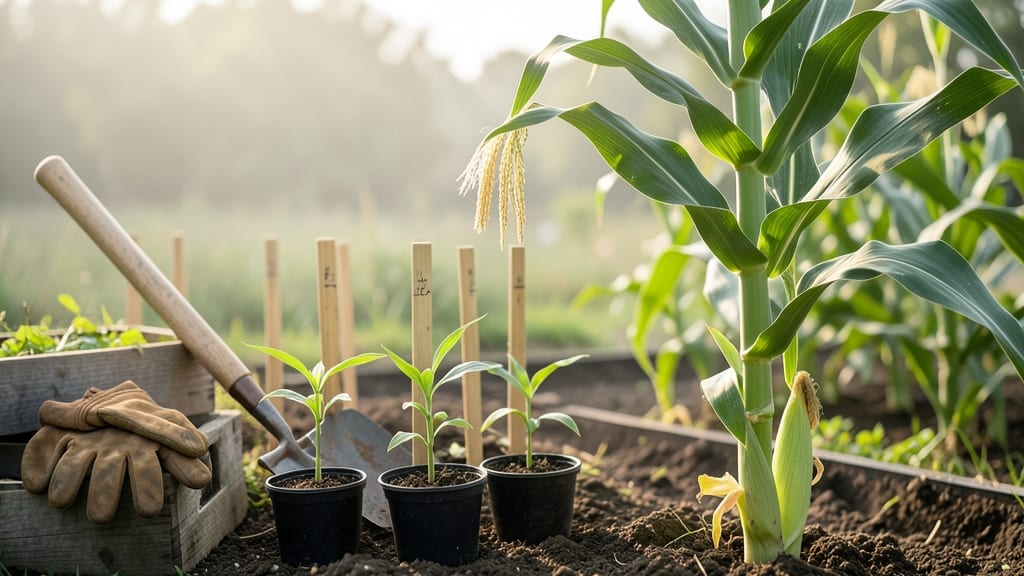
If you're wondering "when do you plant corn in PA", timing is everything—especially when Pennsylvania's unpredictable spring weather can turn a great harvest into a gamble.
Unlike other crops, corn thrives only when soil temperatures hit 60°F+, and planting too early risks frost damage while waiting too long cuts yields.
For Pennsylvania gardeners in zones 5b-7a, the ideal window stretches from mid-April to late May, but your exact start date depends on local microclimates. Whether you're in the Poconos or near Pittsburgh, understanding soil temps and frost-free averages is the key to success.
Let's break down how to get it right for your specific corner of the state.
Most gardeners wait until after the last frost—typically around April 15—but don't rely solely on calendar dates. A soil thermometer is your best friend here, ensuring seeds germinate properly.
We'll cover how to prep your soil, choose the right varieties for PA's short season, and avoid common mistakes that reduce harvests.
With the right timing and care, you'll be enjoying sweet, homegrown 🌽 by July. Ready to plant with confidence? Let's dive into the details that make all the difference in Pennsylvania's variable climate.
Ideal soil temperature and planting windows for PA corn
Getting your corn planting timing right in Pennsylvania means paying attention to two critical factors: soil temperature and last frost dates. Corn seeds need consistent warmth to germinate properly, and planting too early can lead to stunted growth or frost damage.
Let’s break down the exact conditions your garden needs to succeed.
For optimal germination, your soil should reach at least 50°F (10°C), but corn thrives best when soil temperatures are 60°F (15.5°C) or warmer. Using a soil thermometer is the most accurate way to check—simply insert it 2 inches deep in the soil where you plan to plant.
If your thermometer reads below 50°F, wait a few more days before sowing.
Pennsylvania’s last frost dates vary dramatically by region. In the Poconos Mountains, you might not see frost until mid-May, while areas near Pittsburgh or Philadelphia can safely plant by late April.
Always wait 2 weeks after the last frost to ensure your young corn plants won’t be caught off guard by late cold snaps.
Here’s a quick reference for Pennsylvania’s planting windows by region:
| Region | Last Frost Date | Planting Window | Soil Temp Goal |
|---|---|---|---|
| Pittsburgh/Philadelphia | Late April | Mid-April to early May | 60°F+ |
| Central PA (Harrisburg) | Early May | Late April to mid-May | 60°F+ |
| Poconos Mountains | Mid-May | Late May to early June | 65°F+ |
| Erie (Lake Erie influence) | Early May | Late April to early May | 58°F+ |
If you’re planting early-season varieties, you can push the envelope slightly by sowing in late March or early April under row covers or in a greenhouse. This gives your corn a head start, but only works if your soil is warm enough.
For most gardeners, sticking to the mid-April to late May window ensures the best balance between warmth and frost risk.
One common mistake is relying solely on calendar dates rather than soil conditions. For example, you might see frost-free dates in early May, but if your soil hasn’t warmed up yet, your seeds will rot in the cold ground.
Always combine frost dates with soil temperature checks for foolproof timing.
Pro tip: If you’re unsure about your local frost dates, check the Almanac’s Frost/Freeze Calculator for Pennsylvania or use the USDA Plant Hardiness Zone Map to cross-reference your area. Most of PA falls in zones 5b-7a, but microclimates can shift your planting window by 1-3 weeks.
Remember, corn is a warm-season crop that hates cold. If temperatures dip below 50°F (10°C) after planting, germination slows dramatically. Use black plastic mulch or straw mulch to retain heat and moisture in the soil, especially in cooler regions like the Poconos.
Once your soil hits that 60°F sweet spot and the last frost is behind you, it’s time to plant! But don’t rush—corn needs consistent warmth for at least 60 days to mature, so timing is everything for a bountiful harvest. 🌽
Microclimate factors that change PA corn planting dates
Pennsylvania’s diverse geography means your corn planting window can vary by 1-3 weeks depending on where you live. The Poconos Mountains often experience frost 2 weeks later than Philadelphia, while urban areas like Pittsburgh may warm up faster due to heat islands.
Even a 100-foot elevation change can shift your ideal planting date.
Water bodies like Lake Erie create microclimates where temperatures rise earlier in spring near the shore. If you’re near a large lake, you might plant 1-2 weeks sooner than inland areas. Conversely, valleys and low-lying regions tend to stay cooler longer, delaying your planting window.
Check your local USDA Plant Hardiness Zone (PA ranges from 5b to 7a) and cross-reference with last frost averages. For example, Erie averages its last frost on April 20, while Scranton typically waits until May 5.
Use these dates as a starting point, not a rule.
- 🏔️ Mountainous areas (e.g., Poconos): Wait 1-2 weeks longer than average last frost dates.
- 🏙️ Urban heat islands (e.g., Pittsburgh): Plant 1 week earlier—soil warms faster.
- 🌊 Lake Erie shoreline: Start April 15-May 1—warmer microclimate.
- 🌿 Valleys (e.g., Allegheny River): Delay until May 10-20—cooler air lingers.
- 🌾 South-facing slopes: Plant 5-7 days earlier—sun exposure speeds soil warming.
Use a soil thermometer to confirm 50°F+ soil temps before planting, regardless of air temperature. If your microclimate runs cooler, consider black plastic mulch to warm the soil 2-3°F faster. For high-elevation gardens, opt for early-maturing varieties (60-70 days to harvest) to compensate for shorter growing seasons.
Pro tip: If you’re unsure about your microclimate, plant a test row 2 weeks before your calculated window. Corn is forgiving—you can always thin seedlings if early planting works. Just avoid late May plantings, as corn needs 90-120 frost-free days to mature.
Don’t let PA’s variable weather stress you out—adjust your timing based on your specific location, not just the statewide average. With the right approach, you’ll maximize your corn’s potential no matter where you garden in the Keystone State. 🌽