
Plants
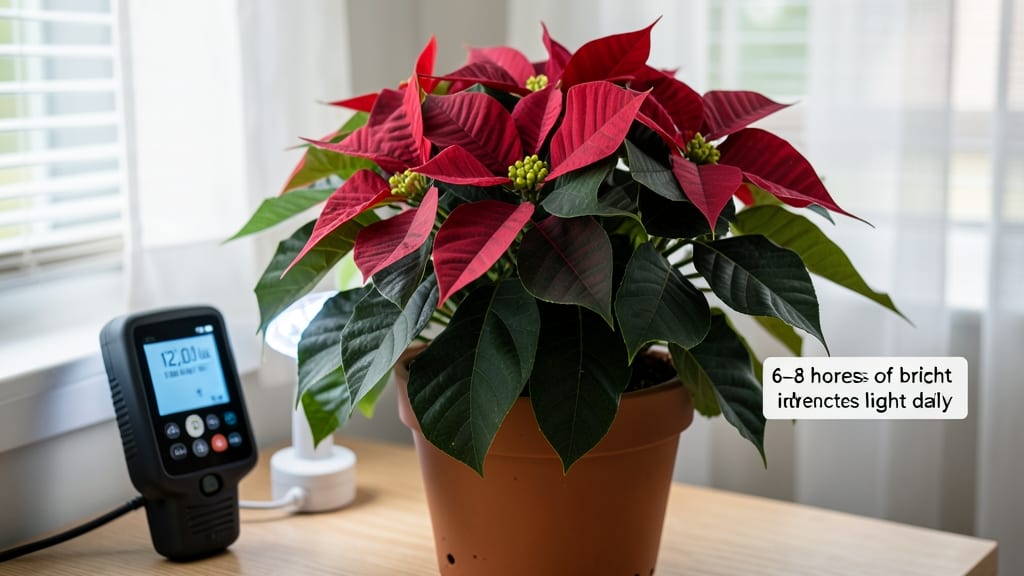
If your poinsettia plant looks tired and lacks its signature holiday color, you're probably not giving it the right light—it's not picky, but it does need the perfect balance. Too little light and it stretches out, too much and those beautiful bracts burn.
The good news? Getting it right is easier than you think, and I'll show you exactly how to create that ideal bright indirect light environment for your plant.
Poinsettias thrive in 6-8 hours of bright, indirect sunlight daily, making them perfect for east or west-facing windows where harsh midday rays are avoided. That means no dramatic sunbathing—just gentle, filtered light that keeps those vibrant leaves popping.
This is especially important during the fall growing season when you want those showstopping blooms for the holidays.
Don't worry if your home doesn't have ideal natural light—artificial options work too. I'll walk you through how to spot when your plant is begging for more (or less) light, and share simple fixes like repositioning or using grow lights.
With these tricks, your poinsettia will stay lush, colorful, and ready to steal the show every December.
Whether you're a first-time plant parent or just want to keep your holiday tradition alive, this guide will help you avoid common mistakes that turn beautiful poinsettias into sad, leggy shadows. Let's get your plant glowing again!


Poinsettia light requirements: the ideal bright indirect sunlight balance
Poinsettias (Euphorbia pulcherrima) thrive in bright indirect light, making them perfect for indoor holiday displays. Unlike sun-loving plants, they need filtered sunlight to prevent leaf burn while maintaining their signature vibrant bracts.
Too little light causes leggy growth, while too much leads to crispy edges—finding the balance is key to a showstopping plant.
In their natural tropical habitat, poinsettias grow under dappled forest light, which mimics the ideal indoor conditions. This means placing them near east or west-facing windows where morning or late afternoon sun gently illuminates their leaves without harsh intensity.
South-facing windows can work, but you’ll need to filter the light with sheer curtains during peak hours.
During the critical bloom period (September–October), poinsettias need 6–8 hours of bright indirect light daily to develop their colorful bracts. If your home lacks natural light, supplement with grow lights (more on this later) to replicate sunlight’s spectrum.
Even low light can’t be fully compensated—poinsettias won’t bloom well in dim corners or basements.
Seasonal adjustments are crucial. In summer, when sunlight is intense, move your poinsettia further from the window to avoid scorching. In winter, when days shorten, extend light exposure with artificial grow lights for 12–14 hours to maintain vigor. This mimics their natural photoperiod and prevents early dormancy.
🌱
| Requirement | Specification |
|---|---|
| Light Type | Bright indirect sunlight |
| Daily Duration | 6–8 hours |
| Best Windows | East or west-facing |
| Distance from Window | 2–3 feet |
| Artificial Supplement | LED grow lights (12–14 hrs/day) |
| Avoid | Direct midday sun, north-facing windows |
If you’re using artificial lighting, opt for full-spectrum LED grow lights placed 6–12 inches above the plant. These mimic sunlight’s blue and red wavelengths, which are critical for photosynthesis and bract development.
A simple 15–20 watt bulb per plant suffices for most indoor setups. Position lights on a timer to provide 12–14 hours of light daily, especially during shorter winter days.
Watch for light stress signs like yellowing leaves or brown tips, which indicate too much direct sun. Conversely, pale green leaves or stretched stems signal insufficient light. Rotate your poinsettia quarter-turns weekly to ensure even growth, as plants naturally lean toward light sources.
This simple habit prevents lopsided development and keeps your plant looking full and symmetrical.
For year-round blooming, simulate the poinsettia’s natural cycle: 12 hours of light followed by 12 hours of darkness. In late summer, reduce light to 10 hours per day for 6–8 weeks to trigger bract formation.
This trick works even with artificial lights—just adjust your timer accordingly. Consistency is key; sudden light changes can disrupt blooming.
🌿
Pro tip: Use a light meter (or your phone’s light sensor app) to measure 1,000–2,000 foot-candles of light—this is the ideal range for poinsettias. If your readings are lower, supplement with grow lights immediately.
Remember, light is the foundation of your poinsettia’s health; without it, even the best fertilizers and watering routines won’t produce vibrant blooms.
🎄
Poinsettia light requirements: the ideal bright indirect sunlight balance
Poinsettias thrive on bright indirect light, which mimics their natural tropical habitat. Too little light causes leggy growth and pale bracts, while too much direct sun scorches their delicate leaves. The key is finding that golden balance—think dappled sunlight through sheer curtains or a well-lit room.
For optimal results, position your poinsettia near an east or west-facing window, where morning or afternoon sun provides gentle illumination without harsh midday rays. South-facing windows can work too, but keep the plant 2-3 feet away to diffuse the intensity.
| Light Requirement | Specifications |
|---|---|
| Daily Duration | 6-8 hours of bright indirect light |
| Intensity | Moderate (60% sunlight scale) |
| Best Window | East or West-facing |
| Avoid | Direct midday sun (10 AM - 4 PM) |
| Artificial Light | 12-14 hours LED grow light if natural light is insufficient |
Seasonal adjustments are crucial. During winter months, supplement natural light with a grow light for 12-14 hours daily to prevent etiolation (stretched, weak stems). In summer, move your poinsettia away from windows to prevent heat stress, even if it means sacrificing some light exposure temporarily.
Monitor your plant's response by observing the bract color intensity. Vibrant red, pink, or white bracts indicate perfect light conditions, while dull colors signal insufficient light. Rotate the pot quarter-turns weekly to ensure even growth and prevent the plant from leaning toward the light source.
If you notice yellowing leaves or brown leaf tips, it’s often a sign of inconsistent light exposure. Adjust by moving the plant closer to a window or adding a sheer curtain to diffuse harsh rays. Remember, poinsettias are light-sensitive—they need consistency to maintain their stunning holiday display.
For indoor growers without ideal windows, LED grow lights are the best artificial solution. Place them 6-12 inches above the plant and use them for 12-14 hours daily to mimic natural daylight cycles. This ensures your poinsettia stays healthy and ready for its holiday debut.